
Last updated September 22, 2026
Level 1 sweep and inspection to the NFPA 211 annual standard - flue, crown, cap, and flashing checked and photographed
Chimney sweep logs do not sweep chimneys. They loosen some creosote - which then falls where a brush and vacuum still have to collect it.
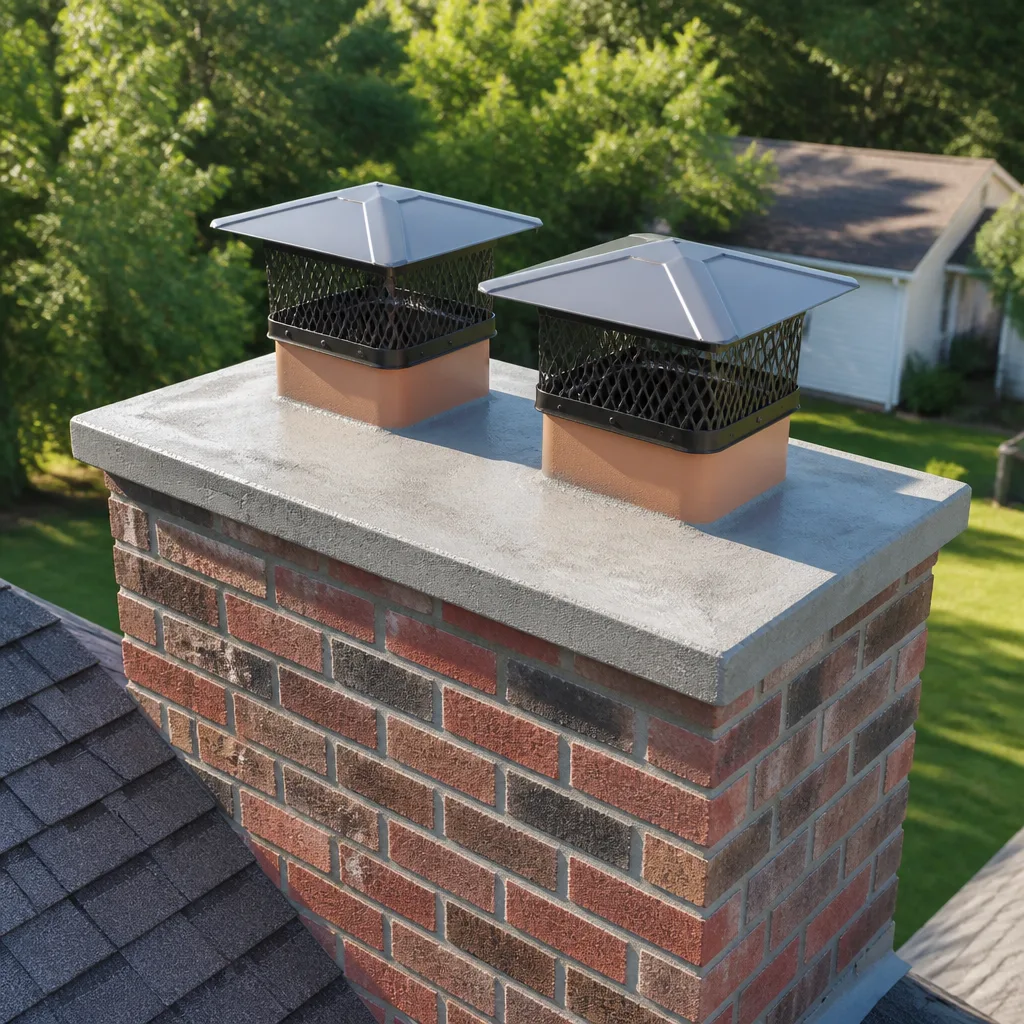
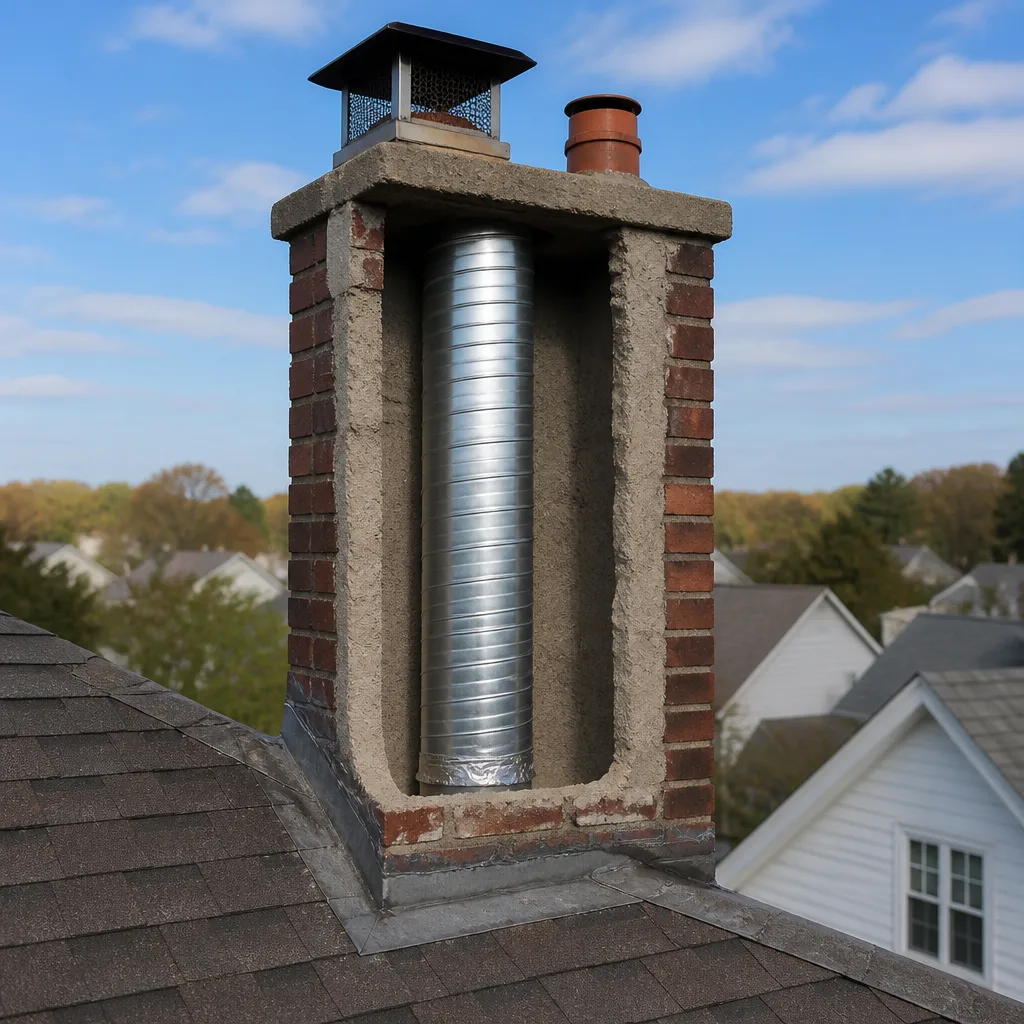
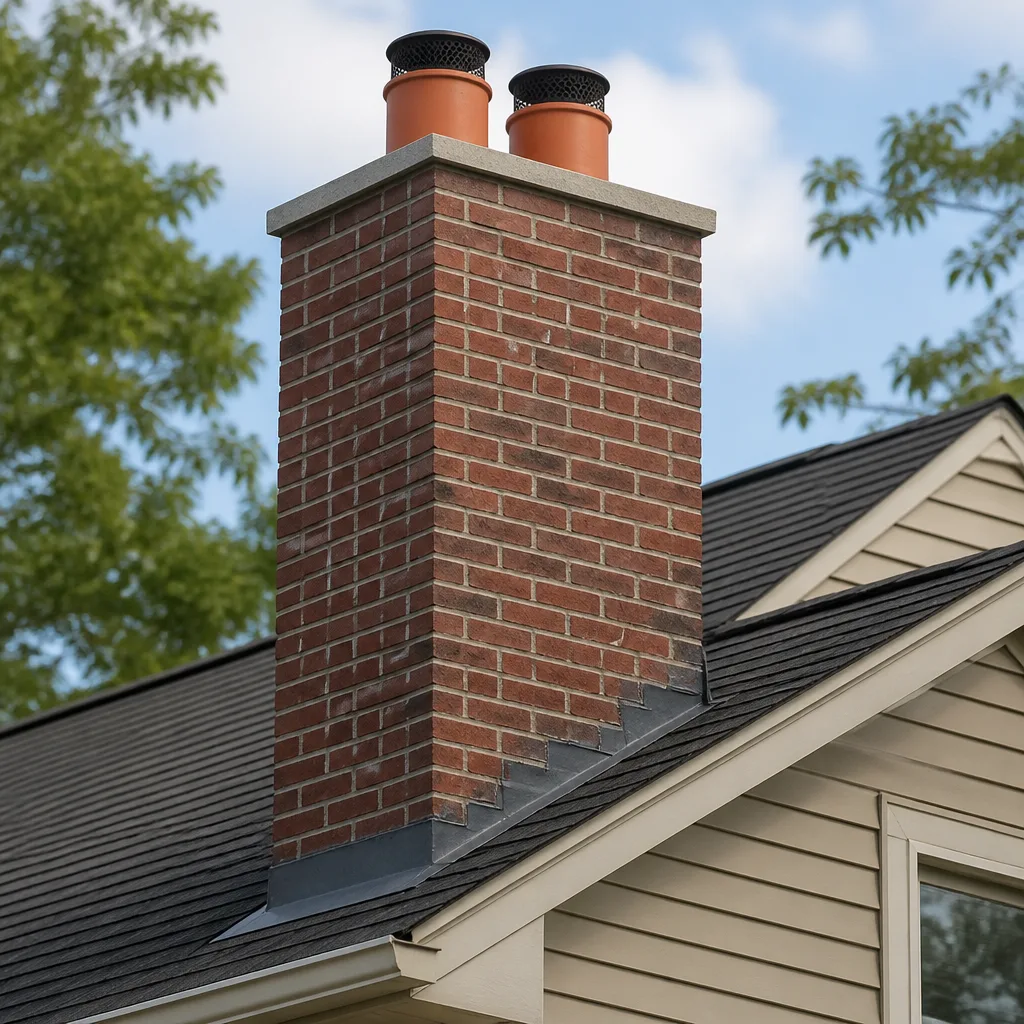
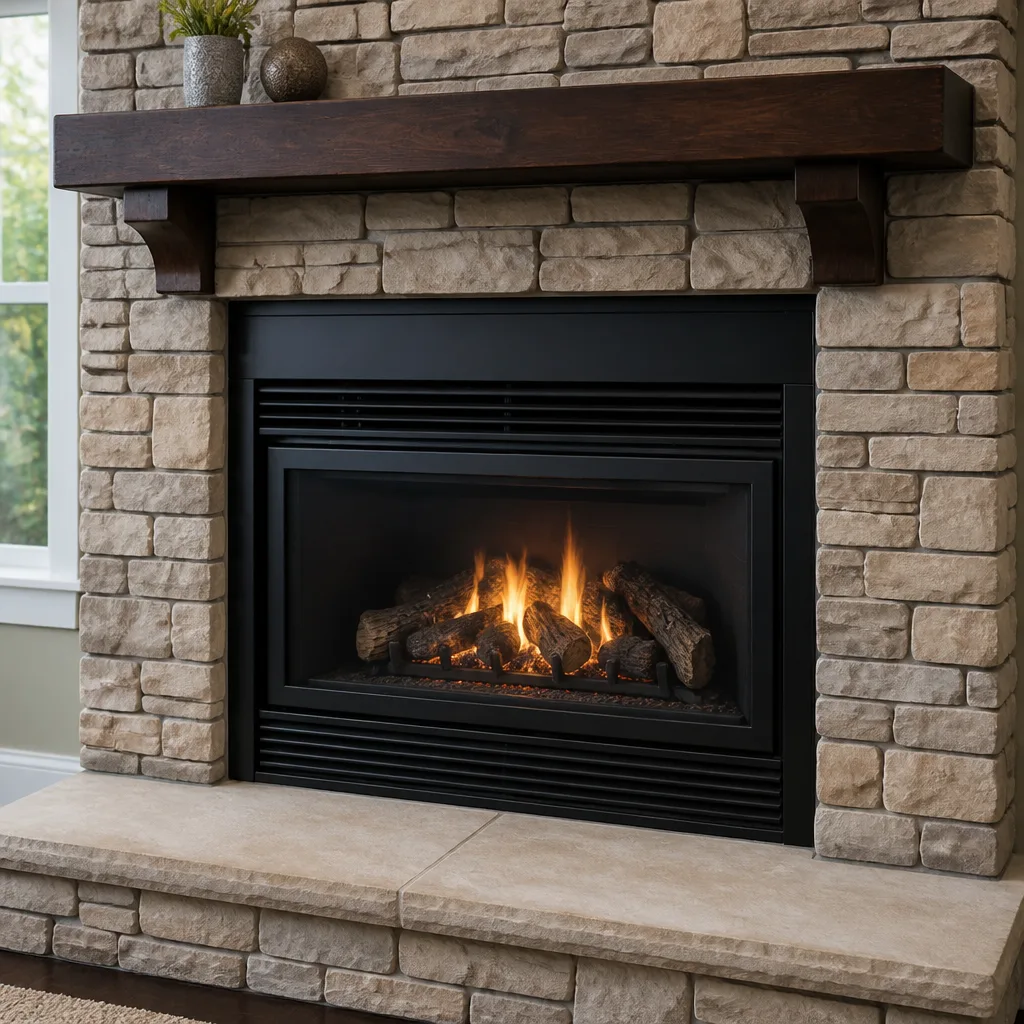
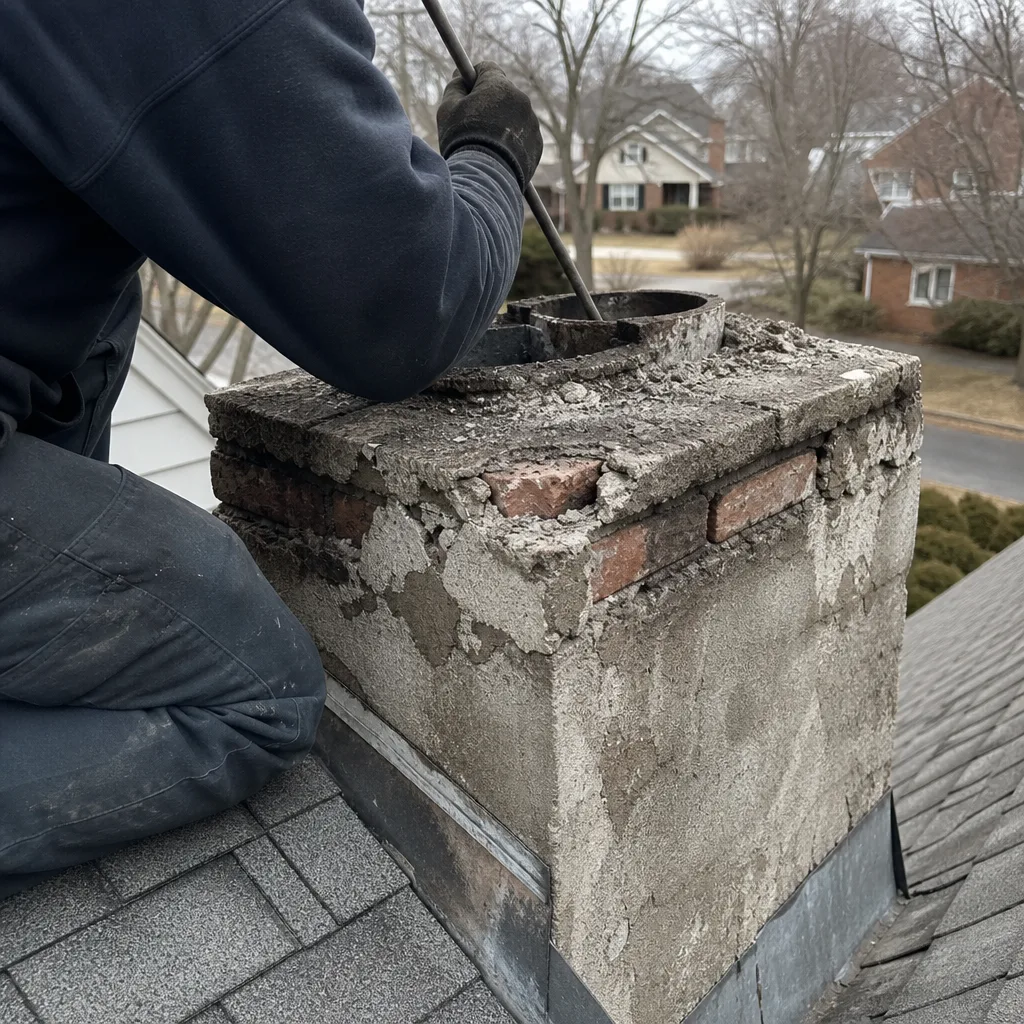 Before
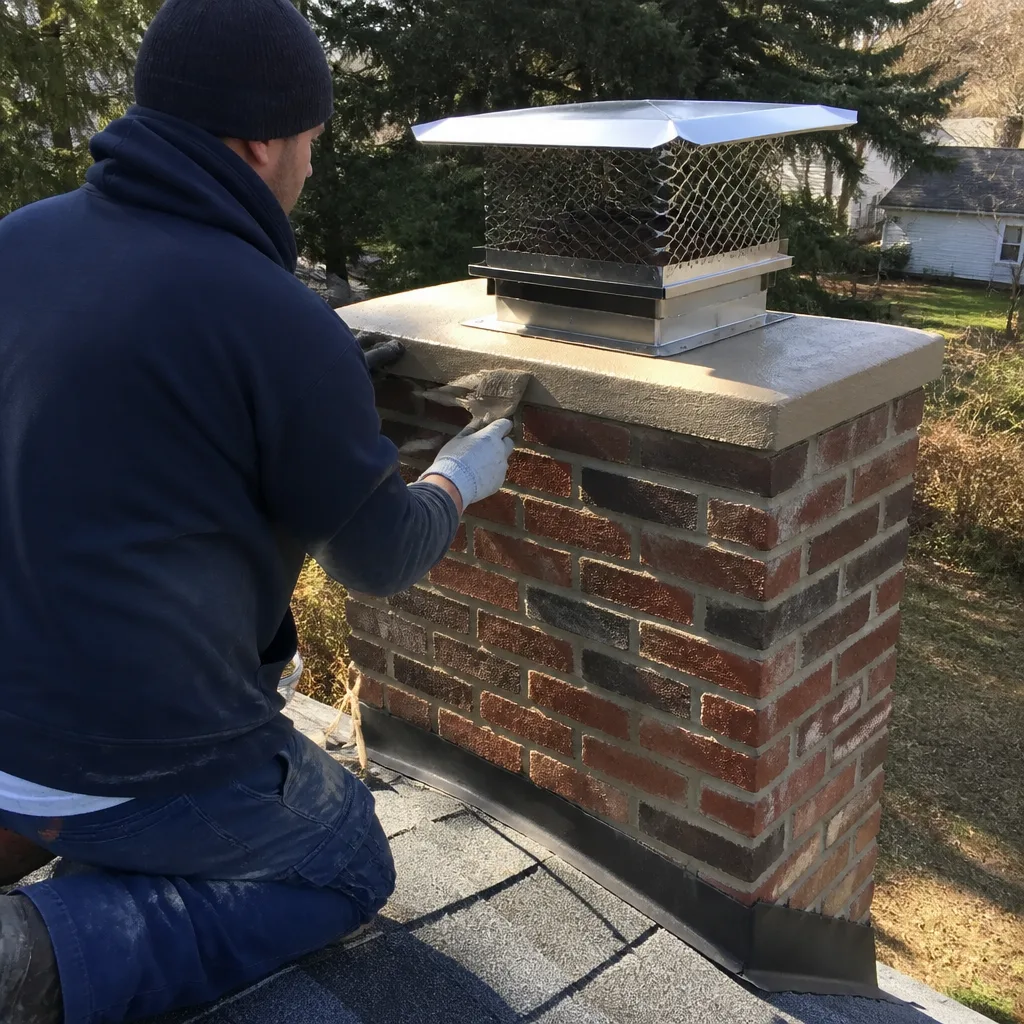 After
After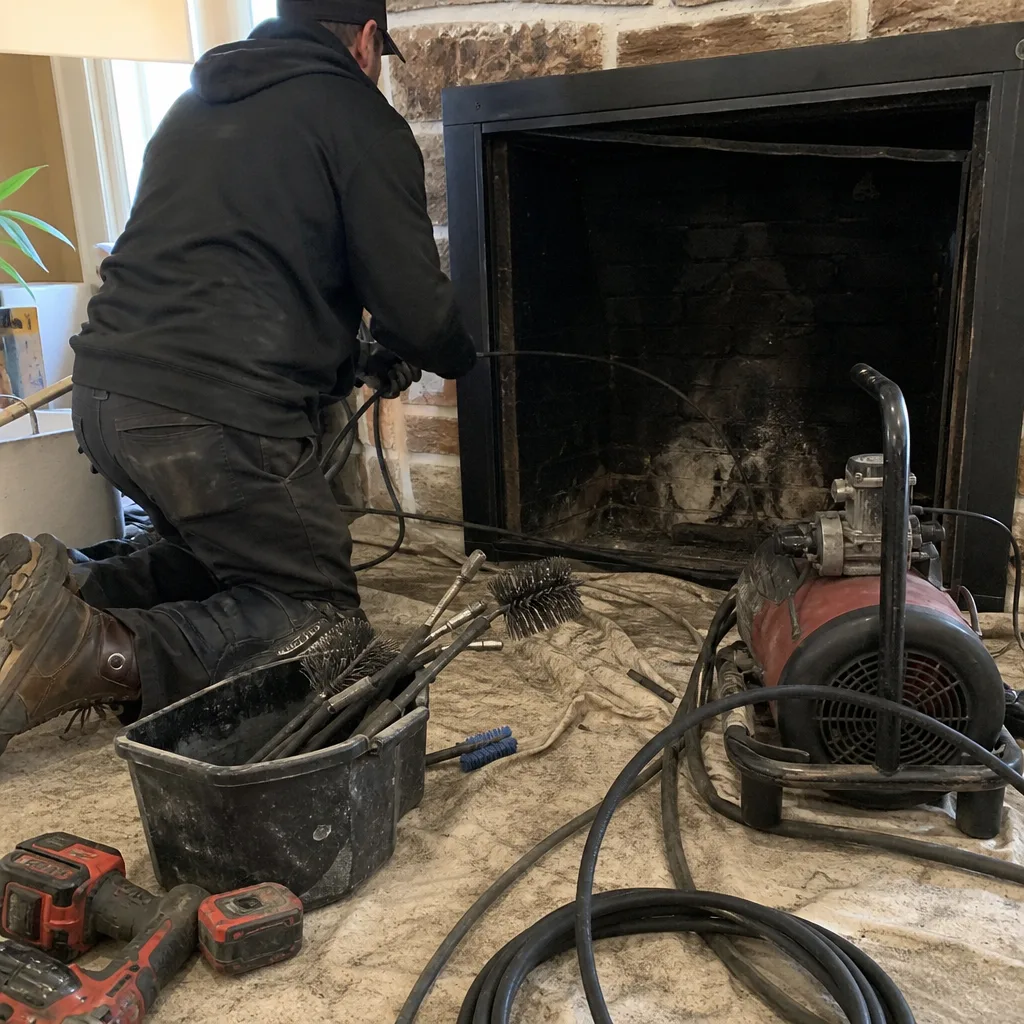 Before
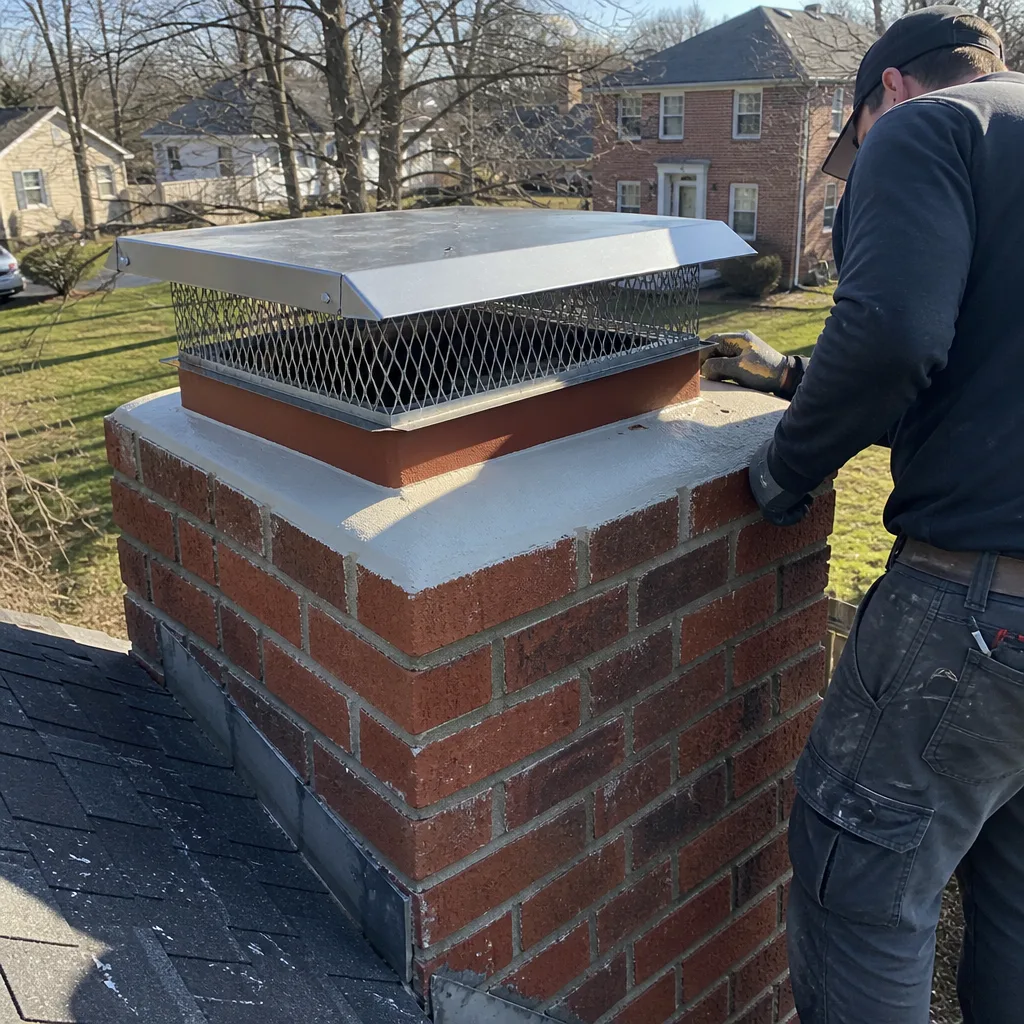 After
After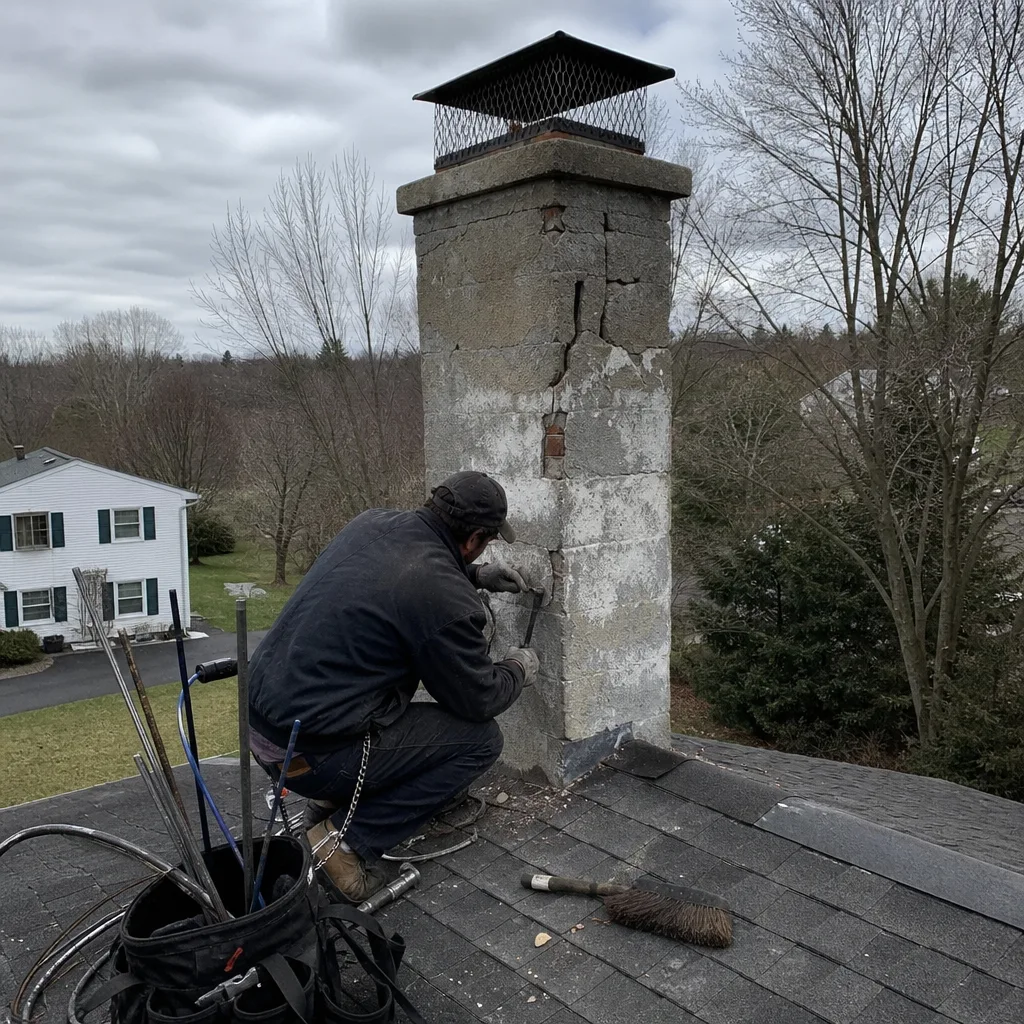 Before
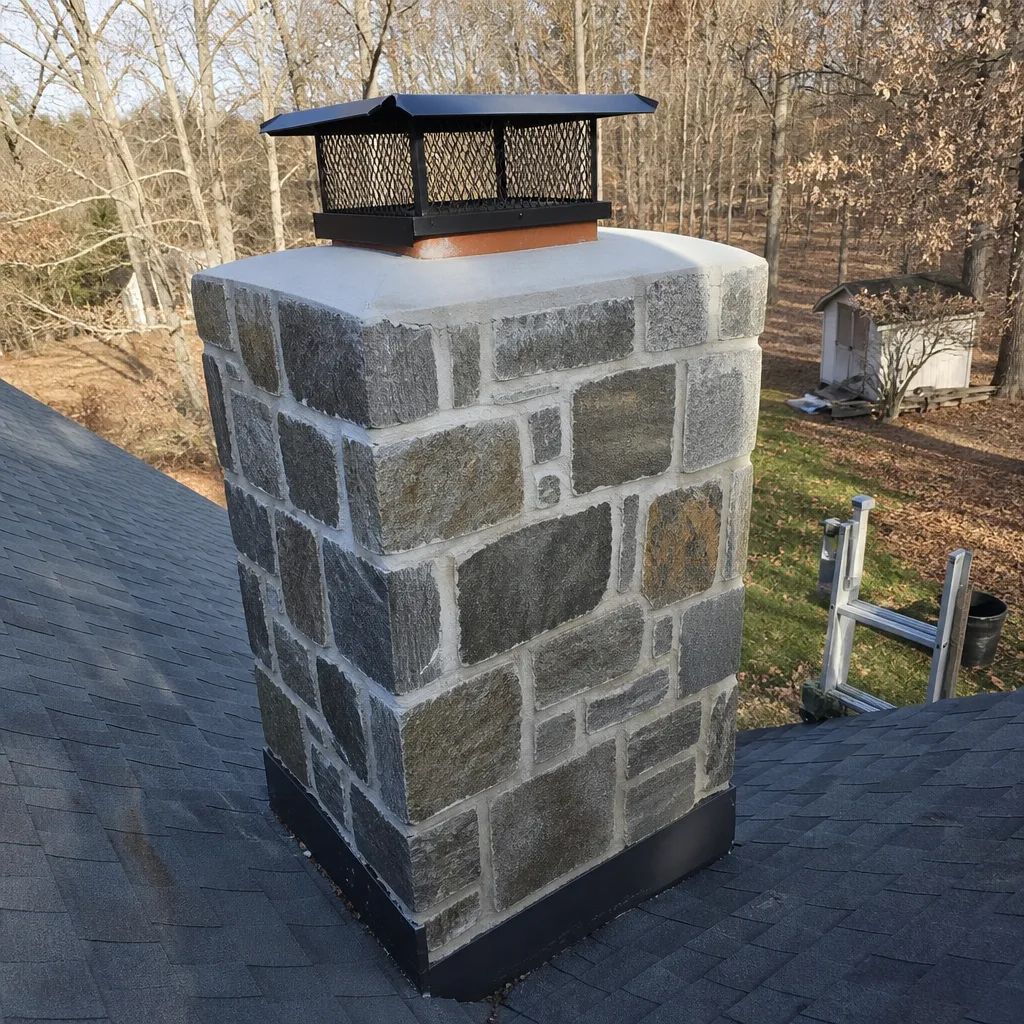 After
AfterDIY vs Professional Chimney Cleaning: The West Chester Homeowner’s Decision Guide
A homeowner who cleans their own chimney every year for a decade saves roughly $2,800 in professional sweep fees. That same homeowner, if a chimney-origin fire damages their West Chester home, may find their insurer denying a claim that averages $17,000 in structural damage because no licensed professional produced the inspection documentation the policy requires. This guide quantifies both sides honestly: what DIY chimney cleaning actually costs in equipment and time, what it can and cannot accomplish, and where the documentation gap changes the math entirely. For related reading, see our Chimney Cleaning Cost Breakdown: The West Chester Homeowner’s Reference for 2026.
Quick Answer
DIY chimney cleaning in West Chester costs $150-$280 in equipment and takes 3-5 hours for a competent homeowner with a standard two-story colonial flue. Professional cleaning with NFPA 211 Level 2 camera inspection runs $189-$349 and produces the written, photo-documented record that homeowners insurance policies in Chester County increasingly require for chimney-origin fire claims. The real decision axis is not cost or difficulty; it is whether you need documentation that a third party will accept.
Table of Contents
- What DIY Chimney Cleaning Actually Costs in West Chester
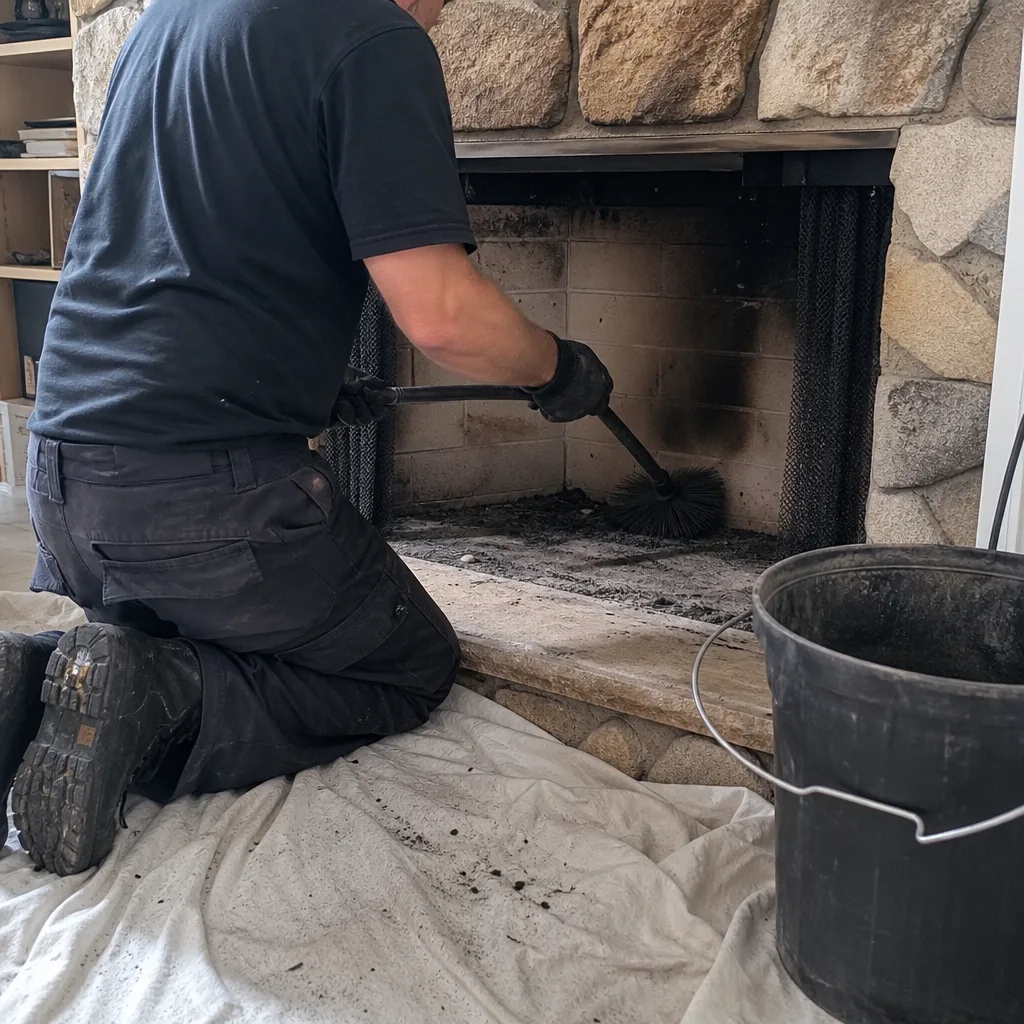
- What DIY Can Do: Surface Creosote and Basic Debris
- What DIY Cannot Do: Camera Inspection and Hidden Defects
- The Documentation Gap: Insurance, Resale, and Liability
- The Creosote Stage Problem: When DIY Makes Things Worse
- A Hybrid Model That Works for West Chester Homes
- Equipment Breakdown: What You Actually Need to Buy
- Common Mistakes to Avoid
- When to Call a Professional
- Frequently Asked Questions
- The Bottom Line
BeforeAfterWhat DIY Chimney Cleaning Actually Costs in West Chester
The internet is full of articles claiming you can clean your chimney for $30. That figure covers a single wire brush and a few rods, which is roughly like saying you can change your oil with a wrench and a bucket. Here is what competent DIY chimney cleaning actually requires for a typical West Chester home: a two-story colonial built between 1960 and 1995 with a masonry flue, clay tile liner, and either a wood-burning fireplace or an insert.
Equipment List with Real Prices
| Item | Purpose | Price Range |
|---|---|---|
| Polypropylene or wire chimney brush (correct flue diameter) | Mechanical creosote removal | $28-$55 |
| Flexible chimney rods, 3-6 pack | Brush extension through flue | $45-$85 |
| Shop vacuum with HEPA filter (rental acceptable) | Soot and debris containment | $65/day rental or $180-$320 purchase |
| Drop cloths, 10×12 ft minimum | Floor and furniture protection | $25-$40 |
| Safety goggles, N95 respirator, work gloves | Personal protection from carcinogenic soot | $30-$50 |
| Flashlight or headlamp, 1000+ lumen | Visual inspection of firebox and smoke chamber | $25-$45 |
| Mirror on extendable handle | Up-flue visual check from firebox | $15-$25 |
| Disposal bags, contractor-grade, 5-pack | Legal disposal of hazardous waste | $12-$18 |
| Total first-year investment | $150-$280 |
Some of this equipment lasts multiple years. The brush wears out. The rods kink or strip. The vacuum filter clogs and must be replaced. Budget $40-$75 annually for consumables and replacement parts.
Time is the hidden cost. A competent DIY clean on a standard West Chester flue takes 3-5 hours: 30 minutes of setup and protection, 45-90 minutes of actual brushing, 30-60 minutes of vacuuming and debris removal, and 30 minutes of teardown. First-timers should double that estimate. This assumes you have already climbed onto your roof to inspect the cap and crown, which adds another 30-60 minutes and introduces fall risk on steep pitches common in West Chester’s older neighborhoods like the Historic District and Marshallton.
Disposal is not trivial. Creosote-laden debris is hazardous waste in Pennsylvania. You cannot legally bag it with household trash in Chester County. The West Chester Municipal Waste Complex accepts limited quantities by appointment; larger volumes require a licensed hauler. Factor this into your calculation.
What DIY Can Do: Surface Creosote and Basic Debris
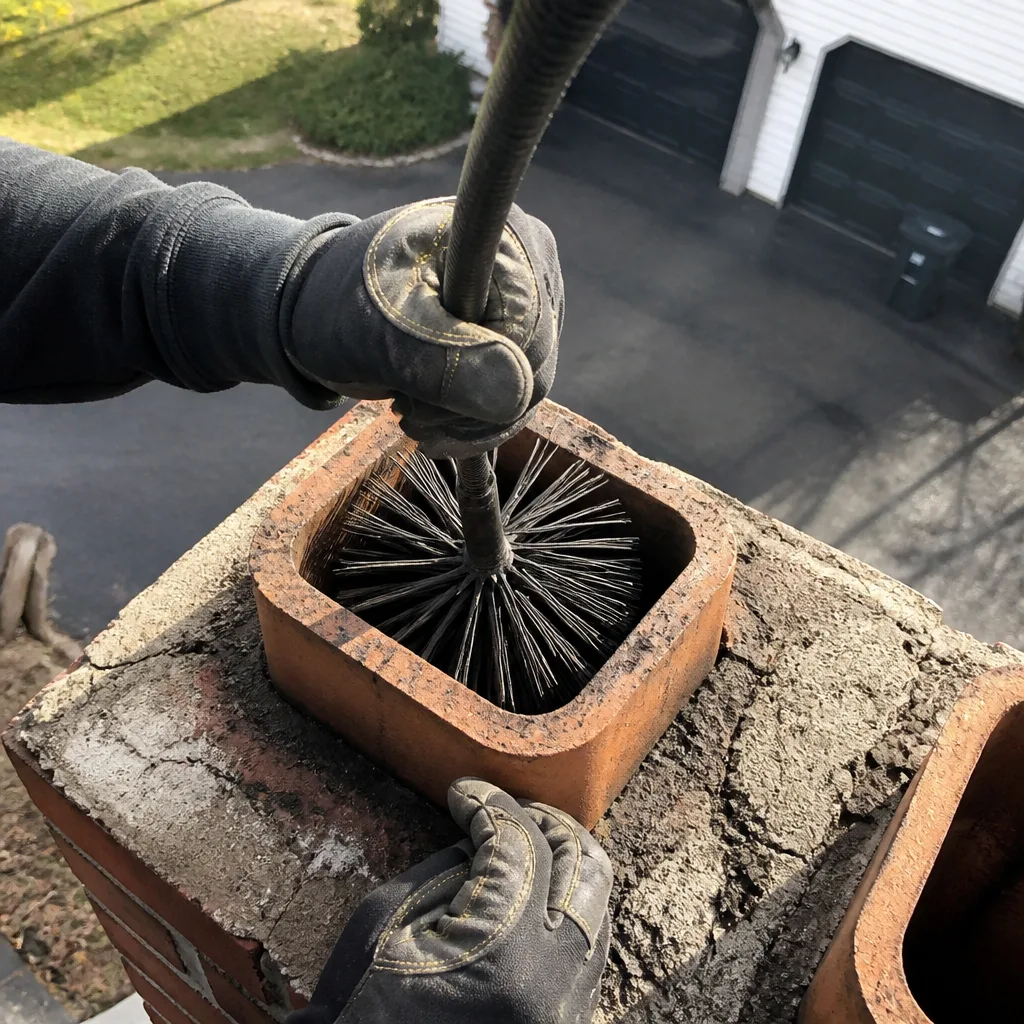
DIY chimney cleaning has a legitimate role. We have seen competent homeowners maintain their flues effectively between professional inspections. Here is where DIY delivers real value:
- Stage 1 creosote removal. This is the flaky, sooty deposit that forms with dry hardwood burned hot and complete combustion. It brushes off readily with a polypropylene brush. If your fires produce minimal smoke and you burn seasoned oak or maple, Stage 1 is likely what you have.
- Firebox ash and debris. Regular removal prevents acidic buildup on the firebrick and keeps the hearth presentable. A shop vacuum with proper filtration handles this safely.
- Smoke chamber soot. The area above the damper and below the flue throat accumulates loose soot that a brush extension can reach.
- Cap and crown debris. Leaves, twigs, and animal nesting material on top of the chimney are accessible from the roof and should be cleared seasonally.
- Visual spotting of obvious defects. A cracked firebrick, a rusted damper, or a missing cap is visible to any attentive homeowner.
The key qualifier in every case: these tasks are maintenance, not inspection. You can clean what you can see and reach. You cannot verify what the cleaning revealed or failed to reveal.
In West Chester’s climate, with freeze-thaw cycles from November through March, we see accelerated spalling on chimney crowns and deteriorated mortar joints. A homeowner can spot obvious crown cracks from the roof. They cannot determine whether that crack has penetrated to the flue liner without dropping a camera, which is where DIY hits its hard limit.
What DIY Cannot Do: Camera Inspection and Hidden Defects
This is the line that matters. A chimney brush removes deposits from the flue wall. It does not tell you whether the flue wall is intact. The defects that cause chimney fires, carbon monoxide intrusion, and structural failure are almost always invisible to a brush and a flashlight.
Here is what a professional Chimney Cleaning & Sweep in West Chester includes that DIY cannot replicate:
- Internal camera scan of the full flue length. NFPA 211 Level 2 inspection requires a video camera dropped the entire flue length, documenting liner condition, joint separation, mortar loss, and creosote staging in place. The equipment costs $3,500-$8,000 and requires training to interpret. A homeowner with a $30 endoscope from Amazon gets a dark, shaky, unlit video they cannot compare to standards.
- Smoke chamber and firebox inspection. The smoke chamber, the inverted funnel above the damper, is where many chimney fires start. It is not brush-accessible in most configurations. Camera inspection from below and above is required.
- Clearance-to-combustibles verification. The National Fire Protection Association specifies minimum distances between chimney components and framing members. These clearances cannot be verified without inspection ports, bore scopes, and knowledge of the original construction. West Chester homes built before 1980 often have clearances that were legal then but fail modern standards.
- Flue liner integrity testing. A clay tile liner with a hairline crack may pass a visual check. A camera scan reveals whether that crack opens under thermal load. Stainless steel liners from DuraFlex or Olympia Chimney require specific gauge and insulation checks that a brush cannot perform.
- Combustion gas analysis. For gas inserts and appliances, draft pressure and CO readings confirm safe operation. This requires a combustion analyzer, not a brush.
We have documented cases in West Chester’s Gay Street corridor and Thornbury Township where homeowners performed diligent annual DIY cleaning for years, only to discover on eventual sale that their flue liner had a gaping joint separation invisible from the firebox. The buyer’s inspector found it. The sale stalled. The remediation cost $4,200. The DIY savings evaporated.
The Documentation Gap: Insurance, Resale, and Liability
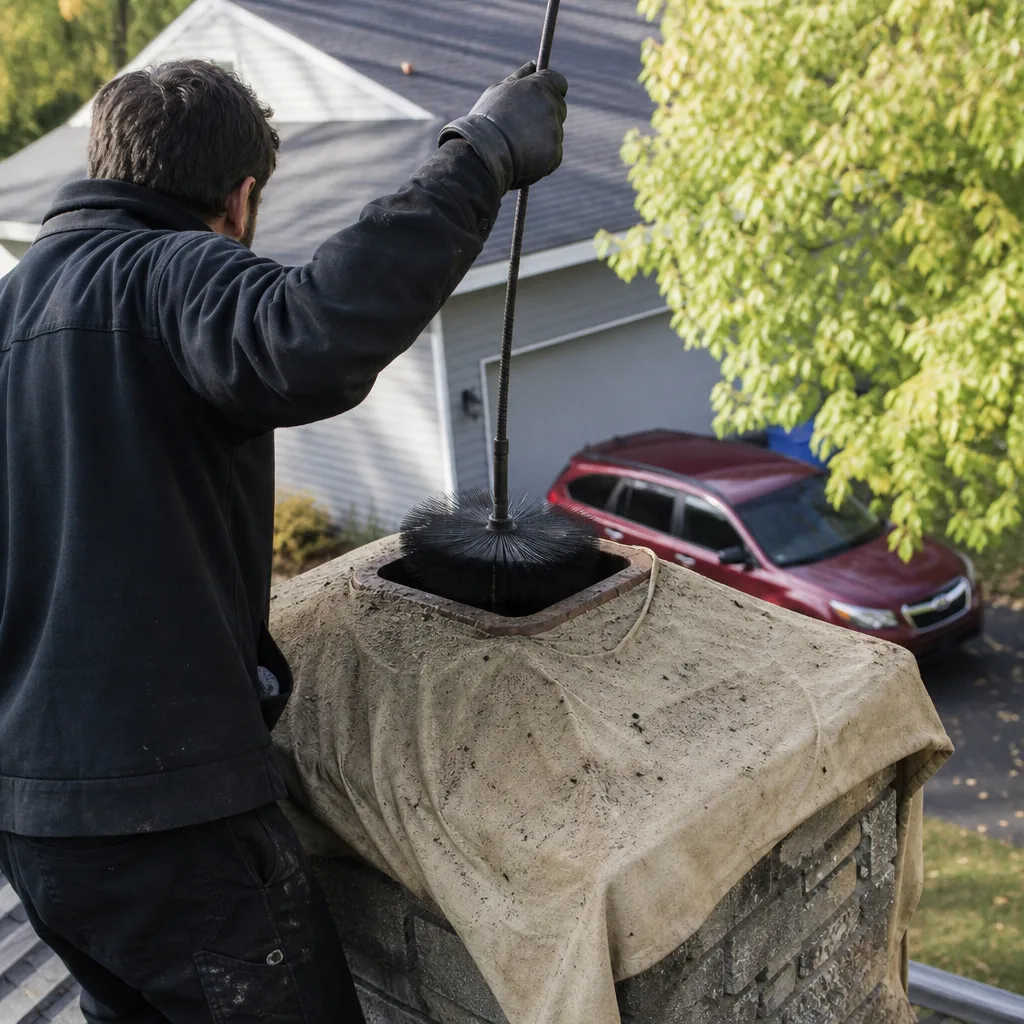
This is where the DIY calculation changes. Documentation is not a bonus. It is a contractual requirement in contexts that carry real dollar risk.
Homeowners Insurance: The Language That Matters
We reviewed policy language from major insurers writing in Chester County. The pattern is consistent and growing stricter. A typical policy endorsement for wood-burning appliance coverage now includes language like this: “Proof of annual professional chimney inspection and cleaning by a licensed chimney sweep shall be maintained and produced upon request.”
The operative words are “professional,” “licensed,” and “produced upon request.” A homeowner’s handwritten log of DIY cleaning dates does not satisfy this requirement. Photos on your phone do not satisfy it. The insurer wants a dated invoice or report from a licensed contractor.
Chimney-origin fires in Pennsylvania average $17,000 in structural damage, per National Fire Incident Reporting System data. If your insurer denies coverage based on failure to maintain professional inspection records, your $2,800 in DIY savings becomes a $17,000 out-of-pocket loss, plus deductible, plus potential premium increase.
Real Estate Transactions
West Chester’s housing market moves fast, but buyers are informed. Home inspectors in Chester County routinely flag uncertified chimney conditions. Buyer’s attorneys increasingly request NFPA 211 inspection documentation. A seller who cannot produce a professional report faces either a pre-sale rush inspection at premium rates or a price concession.
The Haven Standard Documentation Model
At Emberly Chimney Cleaners West Chester home, Clause 4 of the Haven Standard requires a documented photo record on every job. That record includes dated camera footage, written scope, written price, and written warranty. It is archived and reproducible. This is the documentation standard that insurers, inspectors, and attorneys recognize. DIY cannot produce it.
The Creosote Stage Problem: When DIY Makes Things Worse
Not all creosote is equal. The Chimney Safety Institute of America defines three stages, and the stage determines whether DIY cleaning is safe, ineffective, or actively dangerous.
| Stage | Appearance | Removal Method | DIY Appropriate? |
|---|---|---|---|
| Stage 1 | Flaky, sooty, easily brushed | Standard brush | Yes, with proper equipment |
| Stage 2 | Shiny, tar-like, crunchy layers | Mechanical rotary cleaning or chemical treatment | No – requires powered equipment and camera verification |
| Stage 3 | Glazed, hardened, glassy coating | Professional-grade chemical treatment, possibly multiple applications, with full liner evaluation | No – high fire risk, potential liner damage |
Here is the critical point that most DIY guides omit: brushing Stage 2 or 3 creosote with a standard wire brush does not remove it. It fractures the surface glaze, creating an irregular, highly combustible texture with vastly increased surface area. A flue that was dangerous but stable becomes a fire accelerant. We have inspected West Chester chimneys where aggressive DIY brushing on Stage 2 deposits left a flue wall that would have failed a match test.
How do you identify the stage before starting? You cannot reliably, from the firebox, with a flashlight. Stage 2 and 3 deposits often form in the upper flue, above the smoke chamber, where visual access is limited. A camera scan identifies the stage before any mechanical action. This is why NFPA 211 Level 2 inspection precedes cleaning in professional protocol.
West Chester’s burning patterns compound this. Homeowners who burn unseasoned wood, or who damp fires for overnight burn, produce Stage 2 and 3 deposits faster than the national average. The humid summers here allow moisture absorption that accelerates creosote hardening. In our experience, a fireplace used three times weekly from October through March in West Chester typically develops Stage 2 deposits by year three without professional intervention.
A Hybrid Model That Works for West Chester Homes
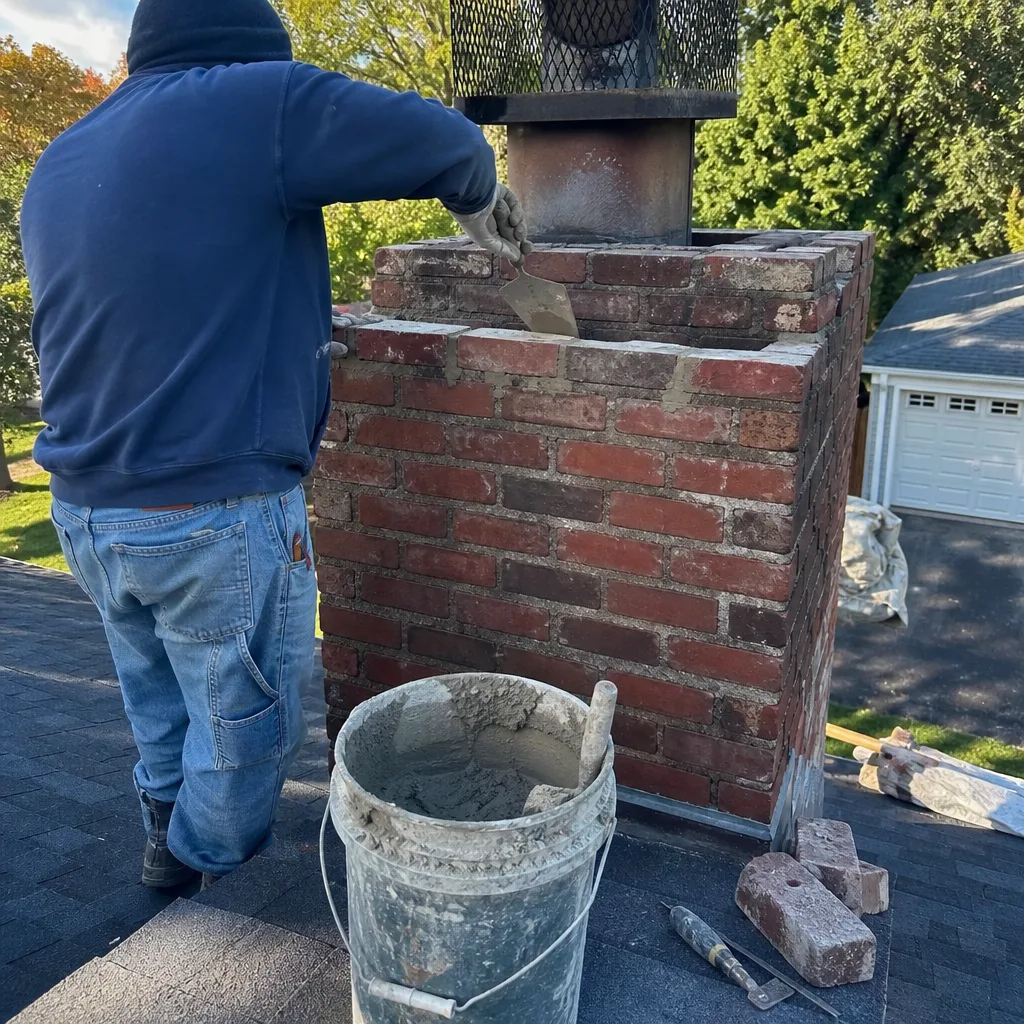
We do not believe every chimney needs professional cleaning every year. The NFPA 211 guideline is annual inspection, with cleaning as indicated. For many West Chester homeowners, a hybrid approach optimizes cost and documentation.
The Schedule
- Year 1: Professional NFPA 211 Level 2 inspection and cleaning. Establish baseline. Receive full documentation. Identify liner condition, creosote stage, and any defects.
- Year 2: DIY cleaning, if and only if: Year 1 inspection found Stage 1 creosote only, intact liner, sound crown, and no clearance issues. Perform DIY clean. Document date and observations in writing.
- Year 3: Professional NFPA 211 Level 2 inspection and cleaning. Verify that DIY maintenance did not mask developing issues. Update documentation. Reassess creosote stage.
- Repeat cycle.
This schedule produces professional documentation every third year, which satisfies most insurance requirements and provides a defensible maintenance history. It reduces professional cleaning costs by roughly 60% over a decade while maintaining safety verification.
Conditions that disqualify the hybrid model:
- Any history of Stage 2 or 3 creosote
- Pre-1980 construction with unlined flue or unknown construction
- Gas appliance with suspected drafting issue
- Visible spalling, cracking, or water intrusion
- Property in a trust, estate, or rental situation where liability exposure is heightened
- Home located in West Chester’s flood-prone areas near Goose Creek, where water damage accelerates liner deterioration
The hybrid model also fails if the DIY clean is performed carelessly. We have found rods stuck in flues, brushes detached and lodged, and vacuum filters blown out, spreading soot through living spaces. Competence matters.
Equipment Breakdown: What You Actually Need to Buy
For homeowners committed to DIY, here is a detailed equipment breakdown with sourcing guidance specific to the West Chester area.
Brushes and Rods
Match brush diameter to flue liner size. A 8″×8″ clay tile flue takes an 8″ round or square brush. An insert with a 6″ stainless steel liner from Olympia Chimney or DuraFlex takes a 6″ brush. Polypropylene is safer than wire for metal liners; wire is more aggressive on clay tile. Buy from a fireplace specialty supplier, not a big-box store, to ensure correct sizing. Fireplace Services in West Chester can confirm your liner diameter if you do not know it.
Vacuum Systems
A standard shop vacuum is inadequate. You need HEPA filtration rated for fine particulate. Soot particles are sub-micron and carcinogenic. Rental HEPA vacuums are available at equipment rental centers in Exton and Downingtown; expect $65-$85 per day. Purchase of a suitable unit runs $280-$420. Never use a household vacuum; you will contaminate your home and destroy the machine.
Safety Equipment
N95 is minimum; P100 is better for extended work. Soot is a Group 1 carcinogen per IARC. Goggles must seal; standard safety glasses allow particle intrusion around the edges. A Tyvek suit is advisable for extensive cleaning.
Roof Access
West Chester’s older neighborhoods feature steep pitches, often 8:12 or greater, with slate or architectural shingles that degrade traction. Falls from roof height are a leading cause of home maintenance injury. If you cannot work comfortably on your roof with a harness and proper anchorage, do not attempt cap and crown work. This is non-negotiable.
Common Mistakes to Avoid
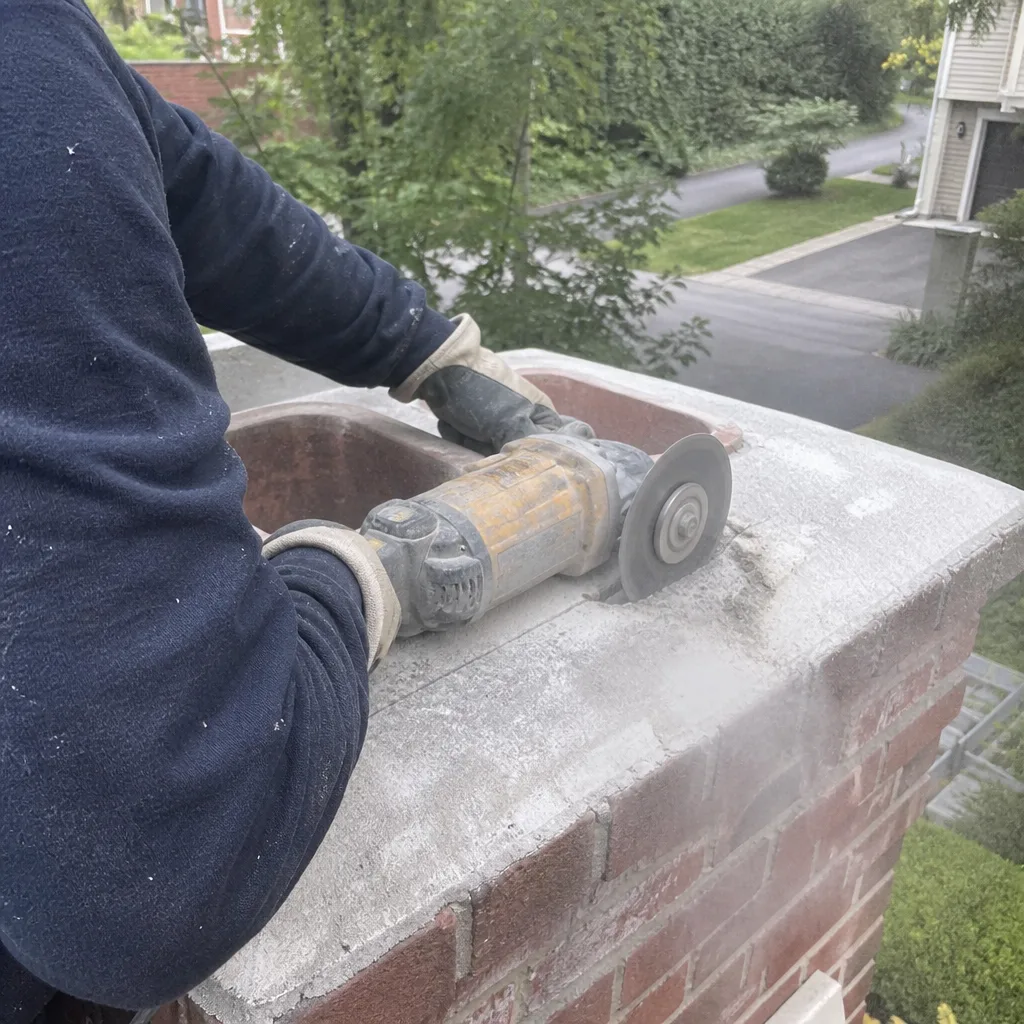
- Using the wrong brush size. An oversized brush wedges in the flue and cannot be retrieved without dismantling the chimney top. An undersized brush misses the wall entirely. Measure your flue before purchasing.
- Brushing from below only. Gravity carries debris down, but the most dangerous deposits often form at the top of the flue where temperatures drop first. Without roof access and top-down brushing, you leave the highest-risk zone uncleaned.
- Ignoring the smoke chamber. The smoke chamber is not reachable with standard rods from the firebox. Homeowners often declare the job done when the flue is brushed, leaving a thick soot reservoir directly above the fire. This is where many chimney fires initiate.
- Improper disposal. Bagging creosote debris with household trash violates Chester County hazardous waste guidelines. Fines apply. The West Chester Municipal Complex accepts limited quantities by appointment; call ahead.
- Cleaning a gas flue like a wood flue. Gas appliance flues accumulate different deposits: sulfuric acid residue, not creosote. Wire brushing damages the metal liner. Gas flues require combustion analysis and specific cleaning protocols.
- Assuming clean means safe. A brushed flue can still have a cracked liner, missing mortar, or improper clearance. Cleaning without inspection is maintenance theater, not safety verification.
- Working without a spotter. Roof work alone is dangerous. A spotter on the ground, a harness properly anchored, and a ladder secured at the base are minimum requirements. West Chester’s narrow lot lines in neighborhoods like the Historic District often place power lines near chimney access points; electrocution risk is real.
When to Call a Professional
Call a professional immediately if you observe any of the following: visible cracks in the firebox or flue tile; rust stains on the firebox walls indicating liner breach; smoke entering the room during operation; a strong odor of creosote even when not burning; or any evidence of animal intrusion. These conditions indicate defects that cleaning cannot address and that may create imminent fire or carbon monoxide hazards.
Call a professional before any real estate transaction, before installing a new appliance or insert, and after any chimney fire event, however minor. If you’re unsure how to choose one, read How to Hire a Chimney Cleaning Contractor in West Chester: A Step-by-Step Guide. These are the documentation triggers that protect your investment and safety.
Emberly Chimney Cleaners West Chester offers free estimates in West Chester. Every estimate includes a written price, written scope, and written warranty before any work begins, per Haven Standard Clause 1. Call (610) 321-4570.
Frequently Asked Questions
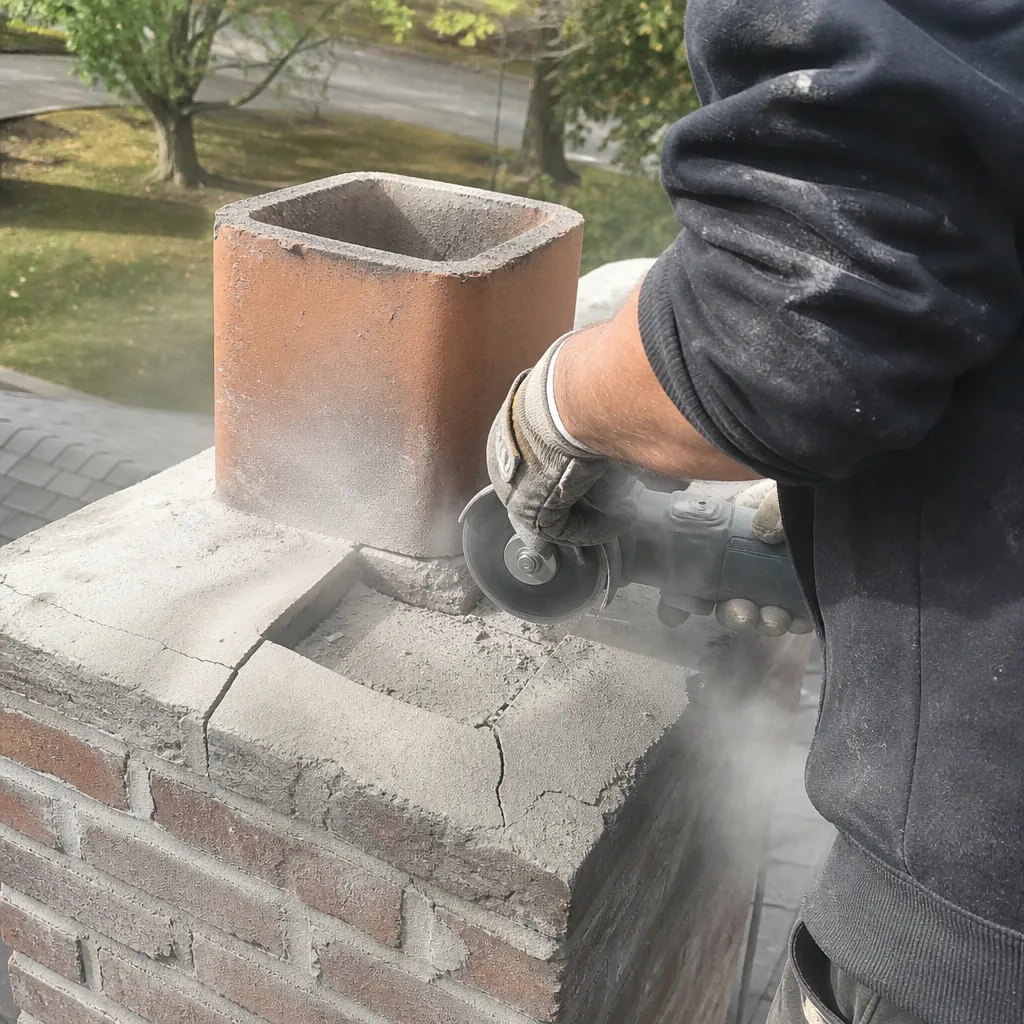
Professional chimney cleaning in West Chester typically runs $189-$349 for a standard masonry flue with NFPA 211 Level 2 camera inspection included. Gas appliance flues and complex configurations may run higher. Emberly Chimney Cleaners West Chester provides a written price before any work starts, with no hidden charges. Call (610) 321-4570 for an exact quote - estimates are free.
You need a new flue liner only if camera inspection reveals cracks, gaps, or deterioration that compromise safe exhaust containment. We have inspected 38,000+ chimneys since 2009, and roughly 30% of pre-1990 West Chester homes have liners that require replacement or relining. The decision should never be made without photo documentation you can see for yourself. If another company recommends liner replacement without showing you camera evidence, get a free second opinion from Emberly Chimney Cleaners West Chester.
NFPA 211 recommends annual inspection, with cleaning as indicated by creosote accumulation. For a West Chester home with moderate fireplace use (2-3 fires weekly in season), this typically means professional cleaning every 1-2 years, with DIY maintenance possible in between if Stage 1 creosote is confirmed. Homes burning unseasoned wood or operating inserts heavily may need annual professional cleaning.
Skipped cleaning allows creosote to accumulate, progressing from Stage 1 to Stage 2 and potentially Stage 3. Stage 3 creosote ignites at lower temperatures and burns with explosive force. The resulting chimney fire can crack the flue liner, allowing flames to reach combustible framing. Carbon monoxide can also leak through liner breaches, particularly dangerous in West Chester’s tightly sealed modern homes. The risk is cumulative and invisible until failure.
You can remove loose surface debris with consumer-grade equipment, but you cannot perform a safe, complete clean or produce inspection documentation. Home Depot brushes are often incorrectly sized and made with inferior bristles that shed in the flue. The vacuum systems sold there lack HEPA filtration for sub-micron soot. For occasional surface maintenance between professional visits, basic equipment suffices. For annual maintenance of a regularly used fireplace, professional equipment and protocol are necessary.
Increasingly, yes. We have reviewed Chester County policy endorsements from major insurers that explicitly require “professional” or “licensed” chimney inspection documentation for wood-burning appliance coverage. The trend is toward stricter requirements, not looser. Check your policy’s “wood-burning stove endorsement” or “fireplace rider” for specific language. If your policy contains this requirement, DIY cleaning without professional inspection documentation voids your coverage for chimney-origin fire claims.
NFPA 211 is the National Fire Protection Association standard for chimneys, fireplaces, vents, and solid fuel-burning appliances. Level 2 is the inspection standard required for real estate transactions, new appliance installations, and after any chimney fire or seismic event. It includes a camera scan of the full flue length, inspection of accessible portions of the chimney exterior and interior, and written documentation of findings. Level 1, a visual inspection without camera, is what most “sweeps” provide. Emberly Chimney Cleaners made Level 2 inspection with camera documentation the default practice in 2009, years before regulators required it, and that practice became Clause 4 of the Haven Standard.
The Bottom Line
DIY chimney cleaning in West Chester is financially rational for surface maintenance on a well-understood system with confirmed Stage 1 creosote. It costs $150-$280 in equipment and 3-5 hours annually. Professional cleaning with NFPA 211 Level 2 inspection runs $189-$349 and produces the documented record that insurers, inspectors, and buyers require. Browse our more guides & resources for additional homeowner information.
The real calculation is documentation risk, not equipment cost. A decade of DIY saves roughly $2,800. A single denied insurance claim on a chimney-origin fire, averaging $17,000 in structural damage, erases that savings six times over. The hybrid model - professional inspection every third year with competent DIY in between - balances cost and documentation for many homeowners.
For any chimney with unknown history, pre-1980 construction, prior Stage 2 or 3 creosote, or current real estate exposure, professional inspection is not optional. It is due diligence with a defined dollar value.
Written by Corrine Halstead, Owner at Emberly Chimney Cleaners West Chester, serving West Chester since 2009.