
Last updated September 22, 2026
Level 1 sweep and inspection to the NFPA 211 annual standard - flue, crown, cap, and flashing checked and photographed
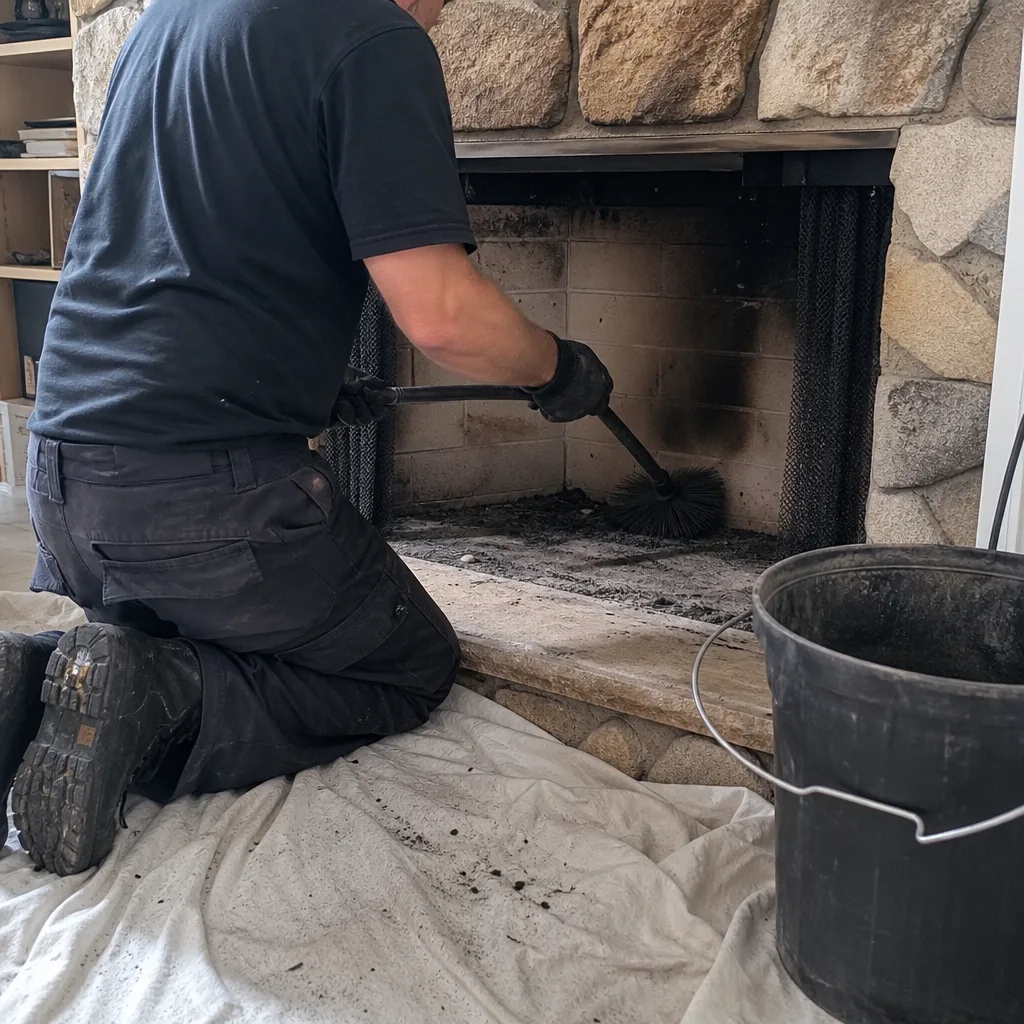
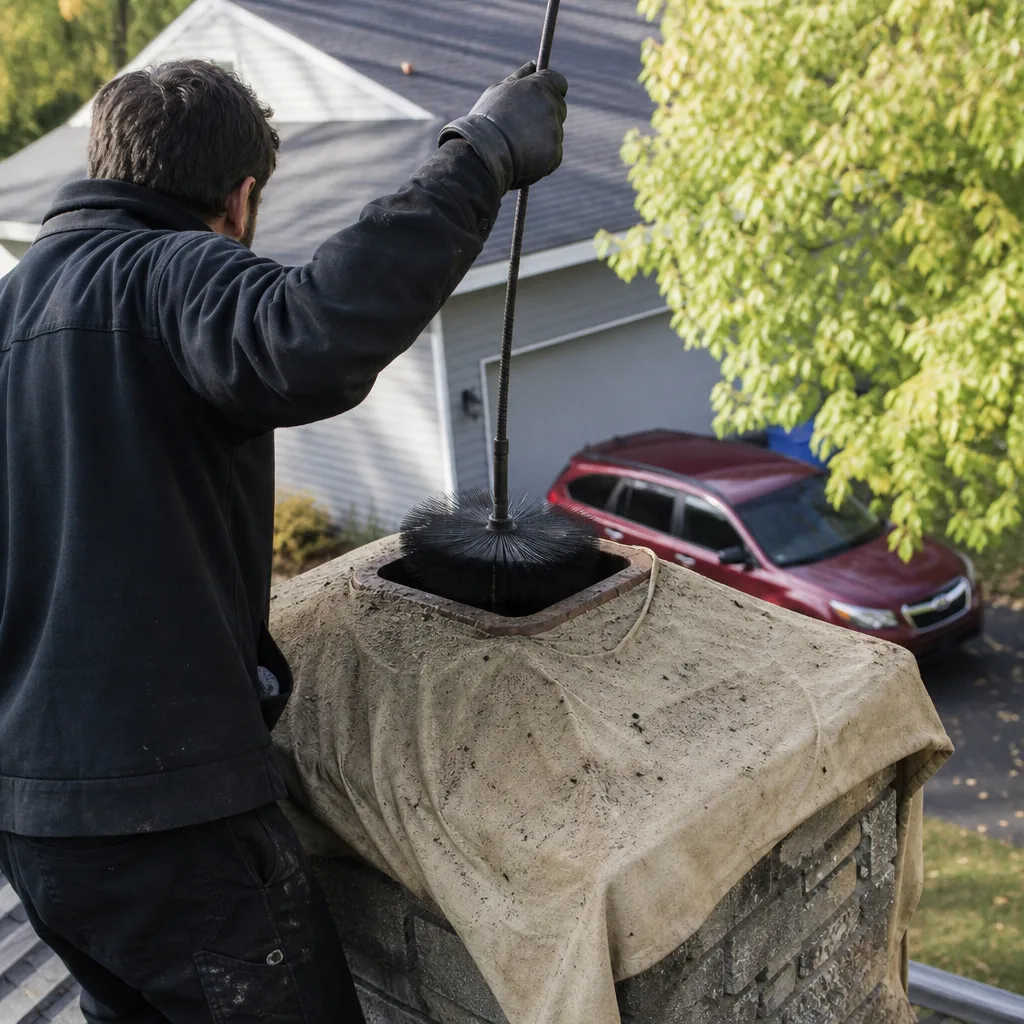
Chimney sweep logs do not sweep chimneys. They loosen some creosote - which then falls where a brush and vacuum still have to collect it.
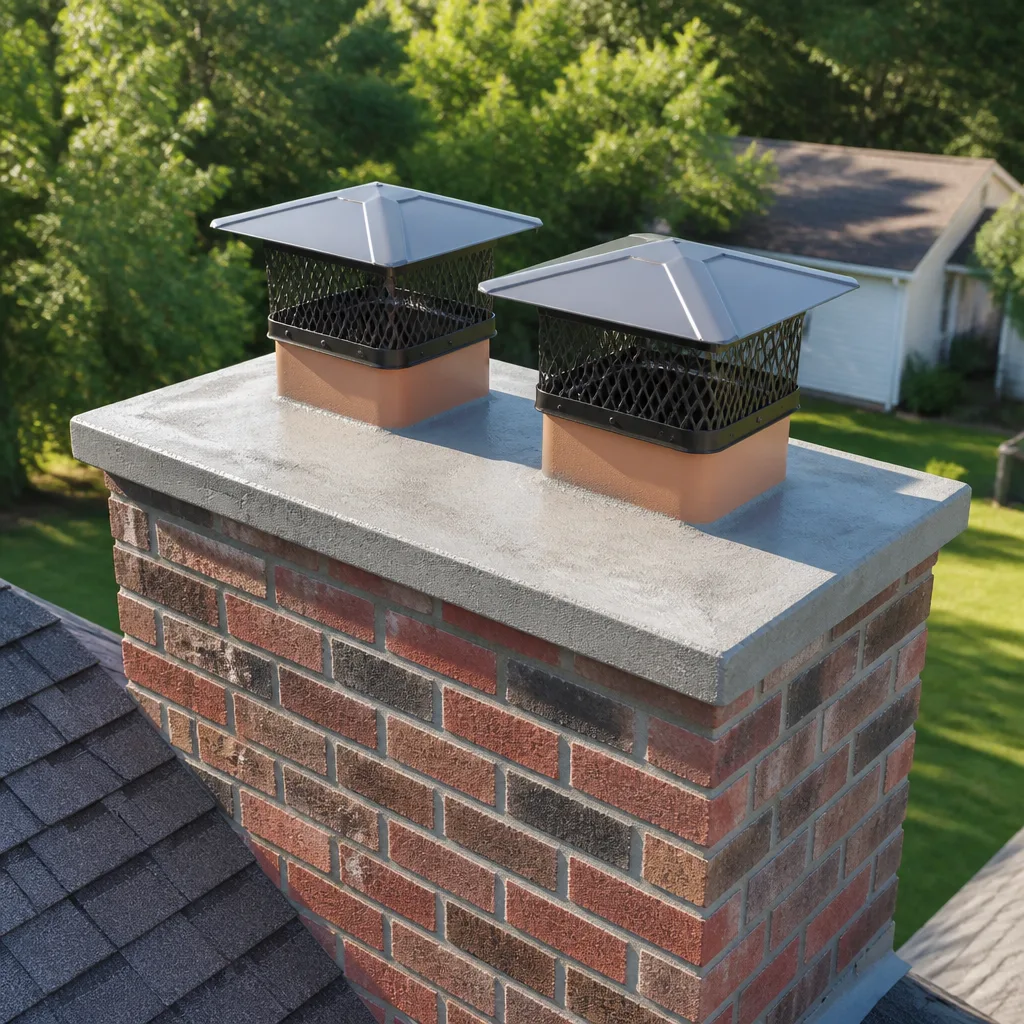
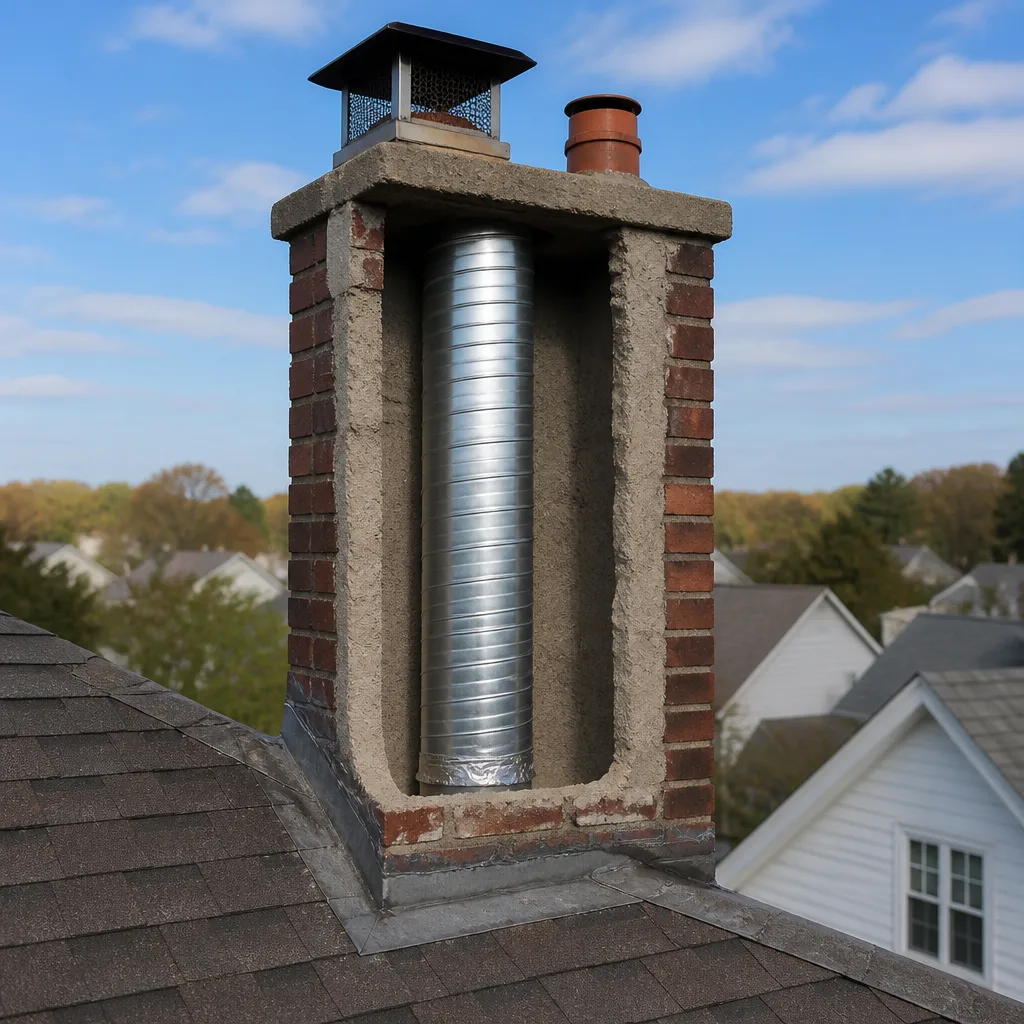
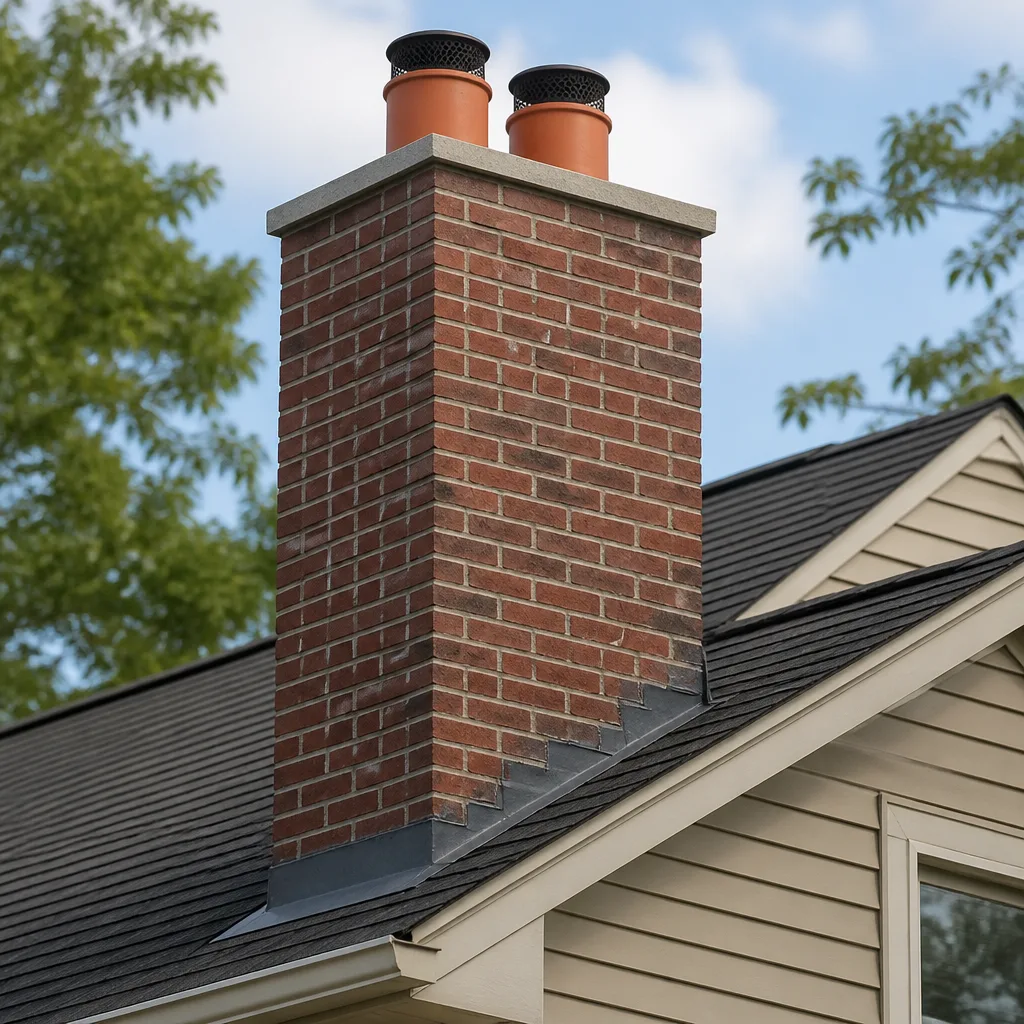
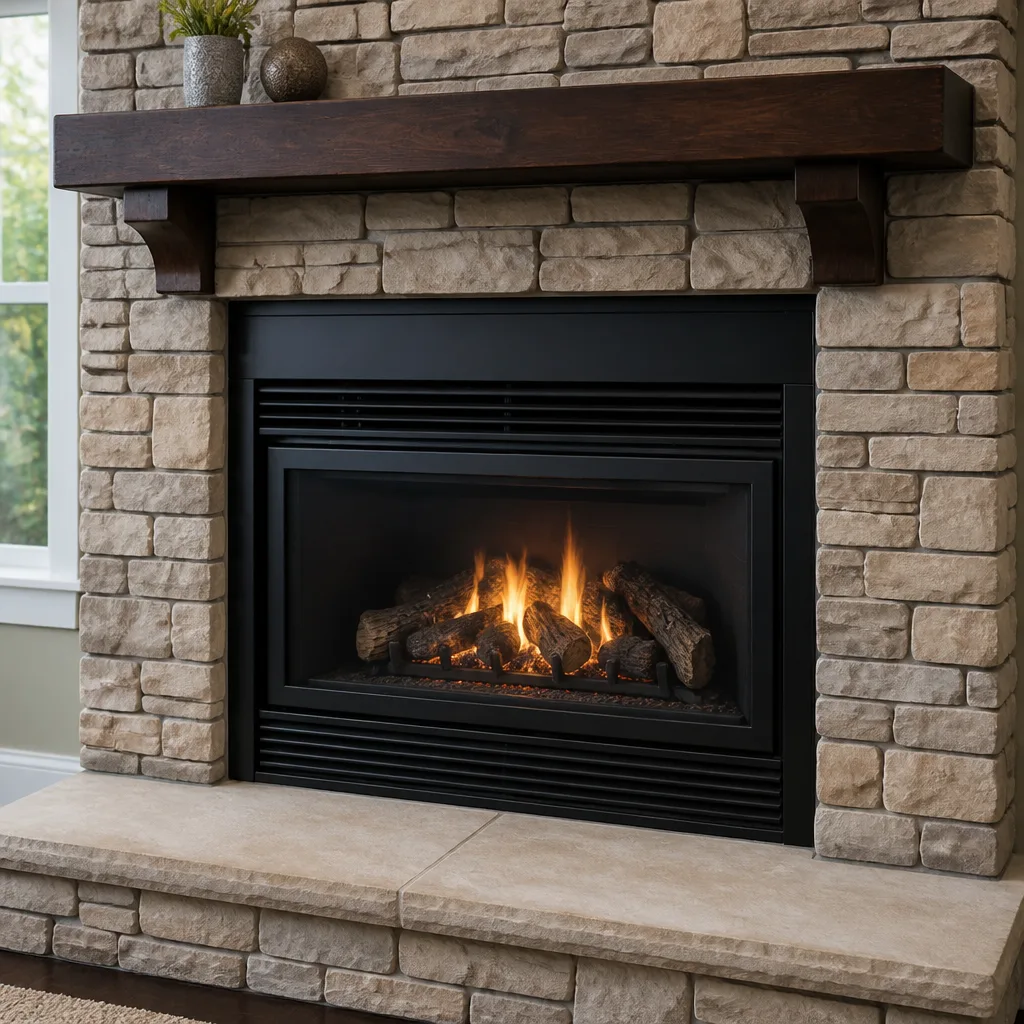
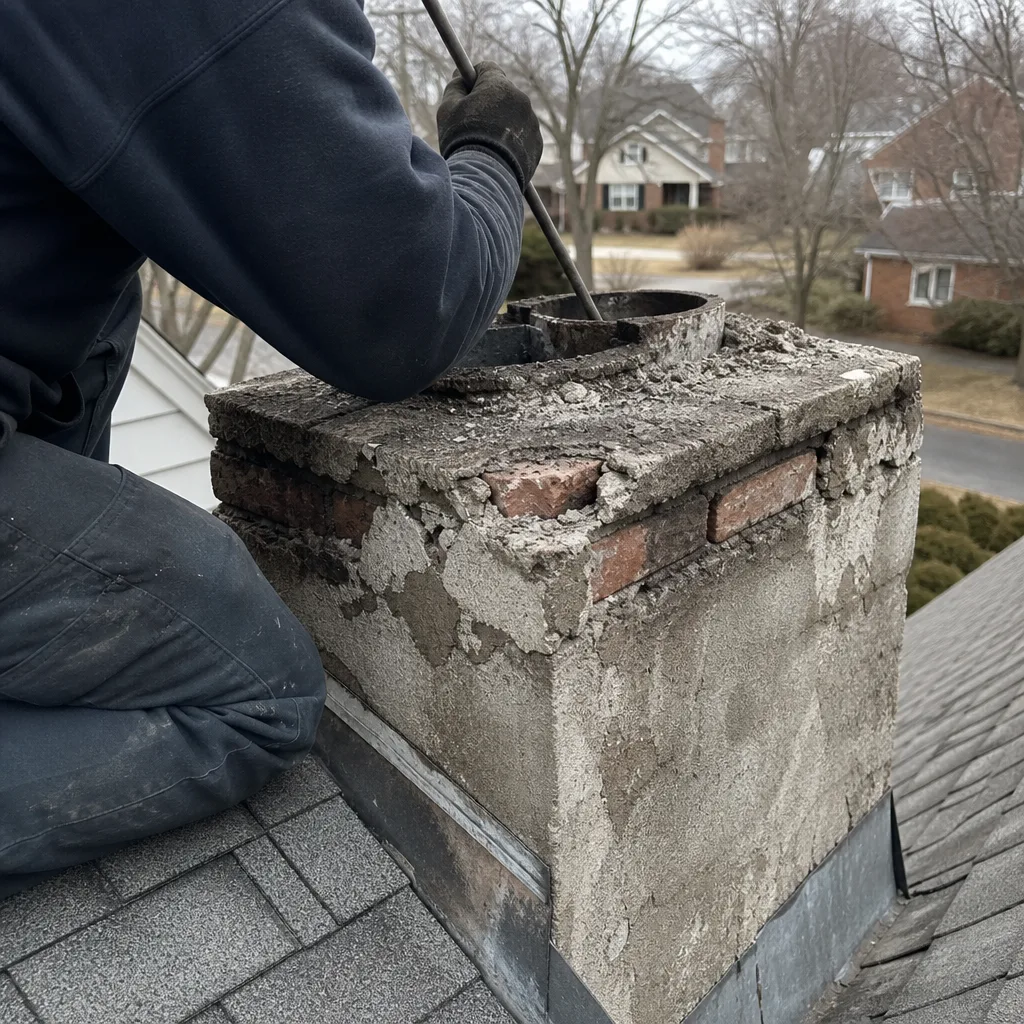 Before
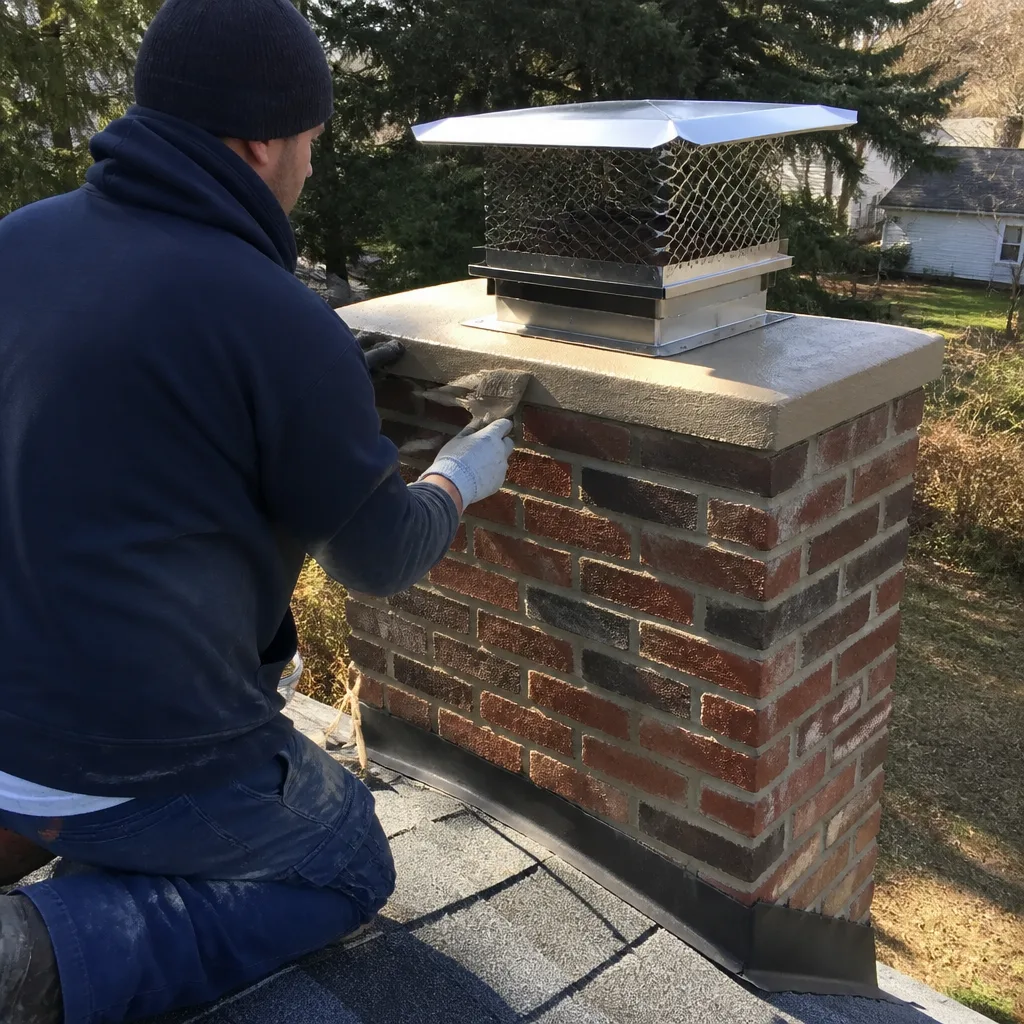 After
After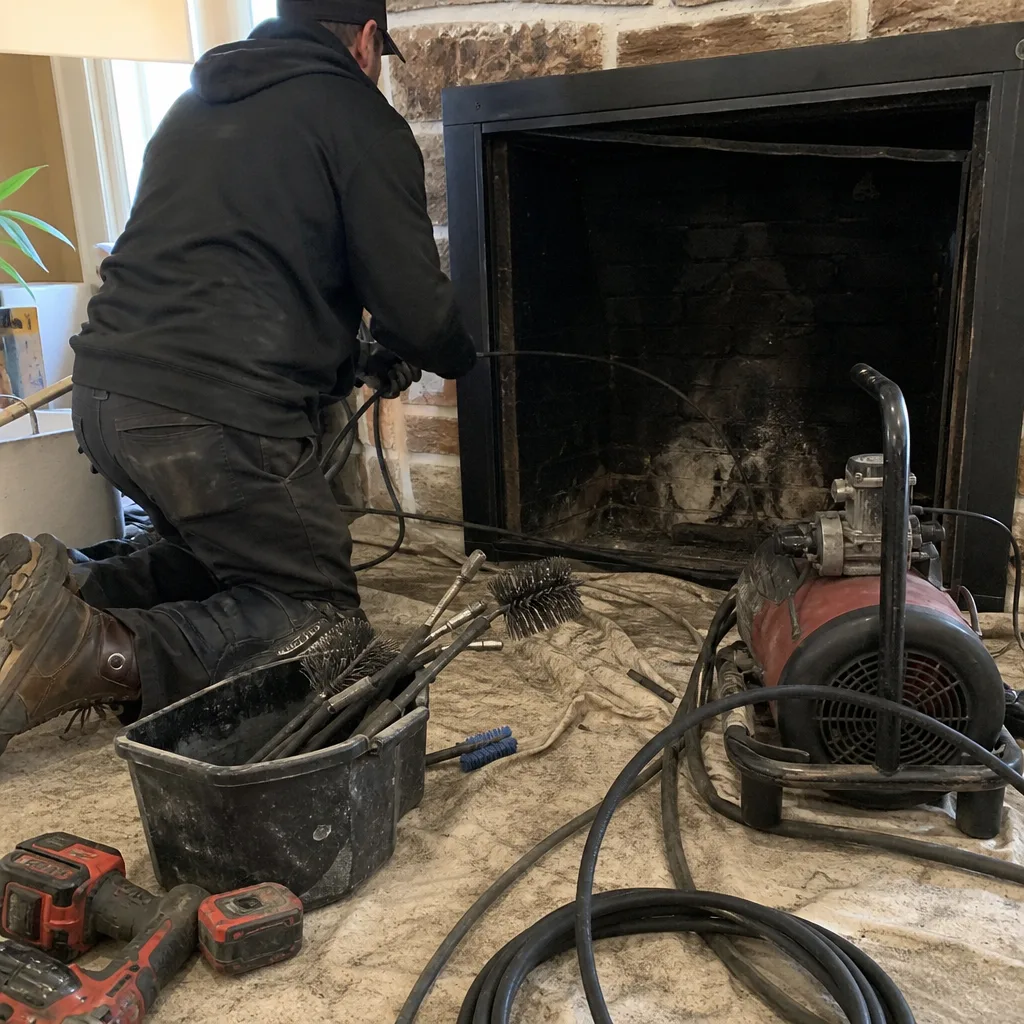 Before
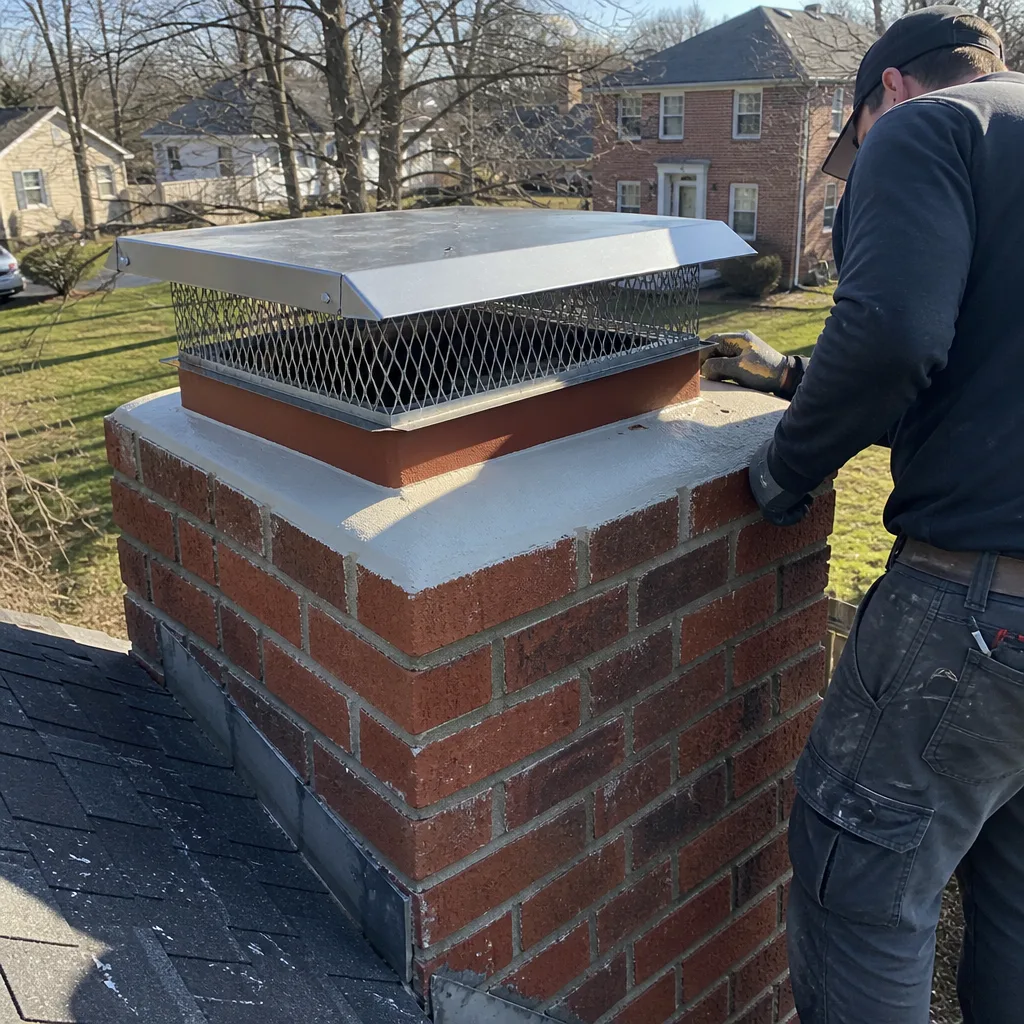 After
After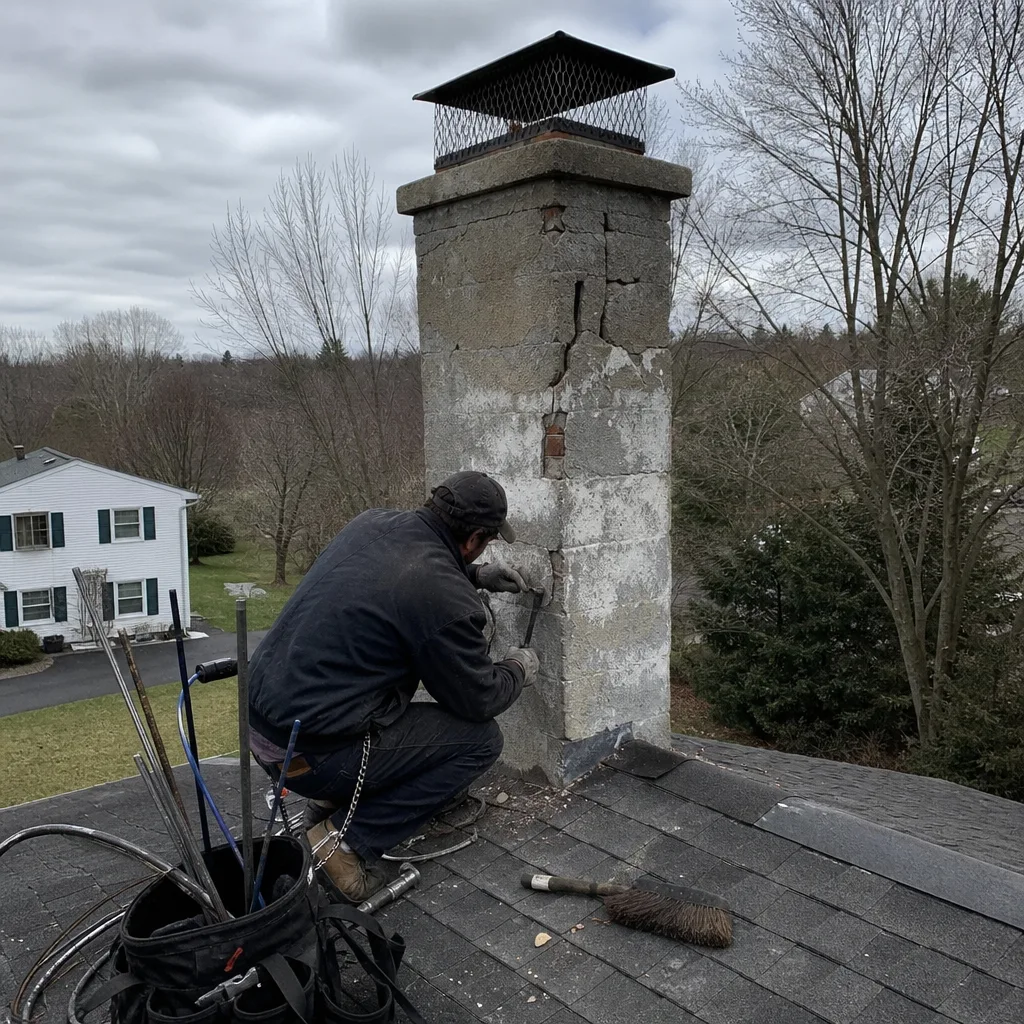 Before
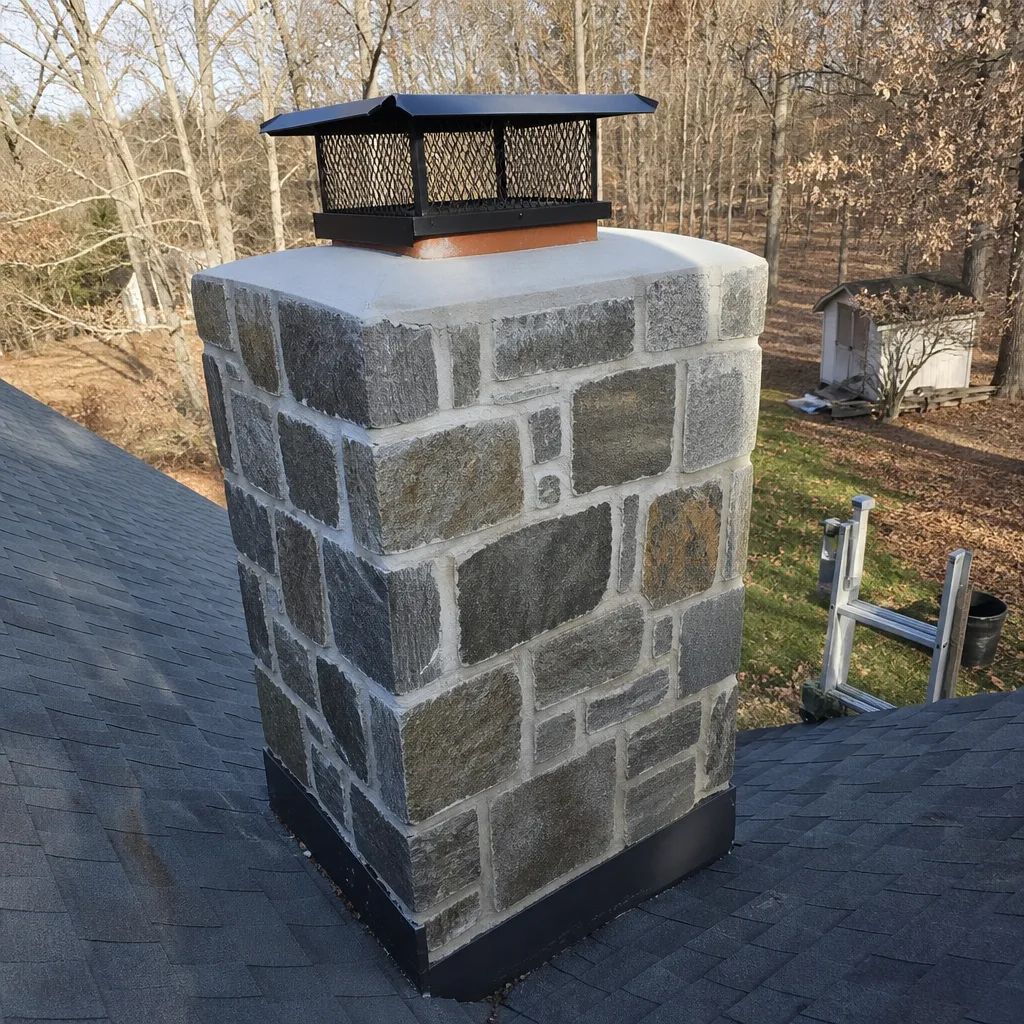 After
AfterChimney Cleaning Permits, Codes & Inspections in PA: What You Need to Know
An unpermitted stainless liner installed without a Chester County mechanical permit can force a seller to either pull a retroactive permit or credit the buyer the full replacement cost at closing. We’ve seen this exact scenario three times in West Chester since 2022, and in every case, the problem started with a sweep who never mentioned permits. This guide - alongside our Complete Guide to Chimney Cleaning in West Chester - maps exactly where routine chimney cleaning ends and permitted work begins under Pennsylvania’s Uniform Construction Code, what Chester County enforcement actually looks like on the ground, and why the documentation you receive matters as much as the work itself.
Quick Answer
Pennsylvania does not require a permit for routine chimney cleaning or sweeping, but it does require one for liner replacement, cap or crown structural alteration, and any modification to the flue path or combustion venting. In Chester County, mechanical permits for chimney work are issued through the township or borough code office, not the county itself, and a Level 2 camera inspection with written documentation satisfies insurer requirements independent of permit records. If you’re selling a home in West Chester, unpermitted chimney work discovered during buyer inspection can become a disclosure obligation under PA’s Real Estate Seller Disclosure Law.
Table of Contents
- What the PA Uniform Construction Code Actually Says About Chimney Work
- Which NFPA 211 Findings Trigger a Permit Requirement
- The Chester County Permit Process for Chimney Liner Replacement
- How Inspection Documentation Satisfies Insurer Requirements
- What a Sweep Company Can Legally Do Without a Contractor’s License
- Real Estate Transactions: When Inspection Reports Become Disclosure Documents
- Common Mistakes to Avoid
- When to Call a Professional
- Frequently Asked Questions
- The Bottom Line
BeforeAfterWhat the PA Uniform Construction Code Actually Says About Chimney Work
The Pennsylvania Uniform Construction Code (UCC), adopted from the International Building Code and International Residential Code with state amendments, governs all construction work that affects structural integrity, fire safety, or mechanical ventilation. Chimney work falls into a split category: maintenance activities that preserve existing function versus alterations that change or restore the system’s design capacity.
Under UCC Section 105.1, a building permit is required for “construction, reconstruction, alteration, repair, movement to another site, removal or demolition of a building or structure.” The critical distinction for chimney work lies in whether the activity constitutes “repair” of an existing system or “alteration” that changes its configuration, materials, or rated performance.
Here’s where Pennsylvania enforcement gets specific. The Department of Labor & Industry, which administers the UCC, has issued advisory opinions clarifying that:
- Routine cleaning and sweeping - removal of combustible deposits from the flue, firebox, and smoke chamber - is maintenance, not construction. No permit required statewide.
- Chimney cap replacement - if the replacement cap is identical in size, material, and attachment method to the original, most Chester County jurisdictions treat this as maintenance. Change the dimensions, add a multi-flue cap where a single-flue existed, or switch from galvanized to stainless, and you’ve crossed into alteration territory.
- Liner repair or replacement - always requires a mechanical permit in Chester County, because the liner is classified as a venting system component under the International Mechanical Code, which Pennsylvania adopted without exemption for chimney-specific work.
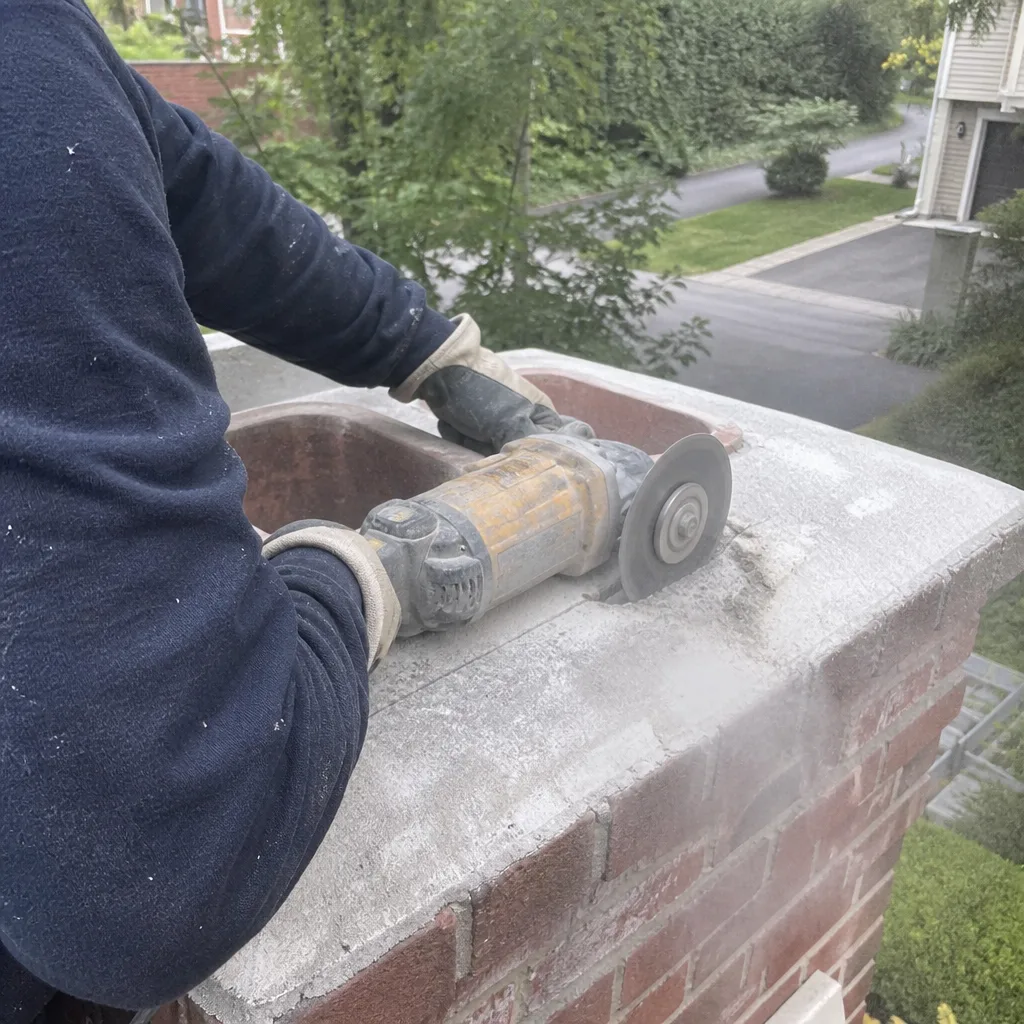
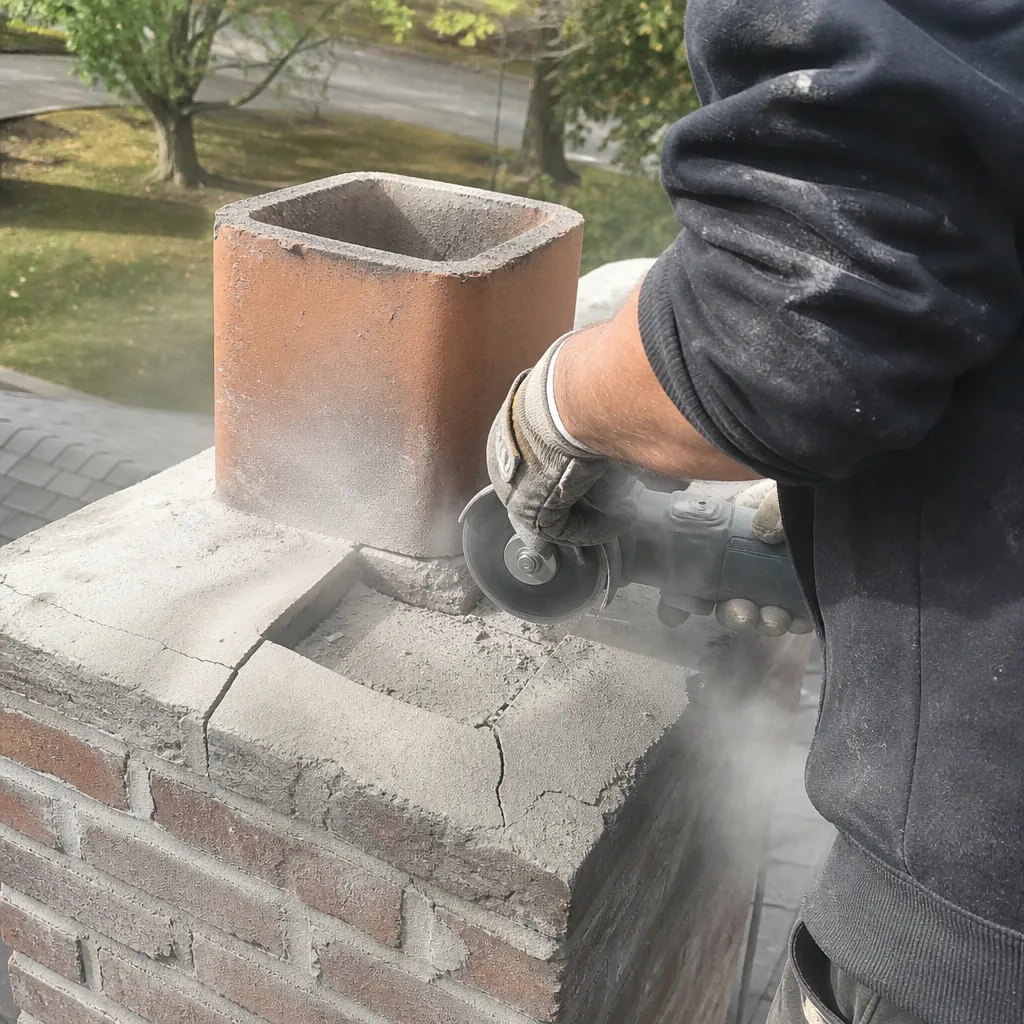
- Crown repair with formwork - if the repair requires removal and replacement of the concrete or mortar crown, this is structural alteration. Surface sealing with a product like HeatShield or crown coat applied without removing the existing crown is typically treated as maintenance, though some West Chester-area townships interpret this differently.
- Smoke chamber parging - applying refractory mortar to smooth the corbeled brick of the smoke chamber is universally classified as alteration in Pennsylvania, because it changes the flow characteristics and clearance to combustibles.
The enforcement reality in West Chester and surrounding Chester County townships is that code officers have limited bandwidth for proactive chimney permit verification. Permits get enforced when they’re discovered: during a home sale inspection, after a fire marshal investigation, or when a neighbor’s complaint triggers a township inspection. This creates a false sense of permissiveness. We’ve documented chimney liner replacements in West Goshen, East Bradford, and Westtown townships where the work was performed without permits for years, only to surface as a $4,000-$7,000 seller credit at closing when the buyer’s inspector flagged the missing mechanical permit.
Pennsylvania’s UCC also delegates specific interpretation to the “municipality of jurisdiction,” meaning West Chester Borough’s code office may interpret crown repair differently than West Goshen Township’s. The only reliable approach is to contact your specific township or borough code office before work begins. At Emberly Chimney Cleaners West Chester home, we maintain current contact information for all Chester County township code offices and verify permit requirements as part of our written scope before any alteration work starts - Clause 1 of the Haven Standard requires the written price, written scope, and written warranty delivered before anyone starts.
Which NFPA 211 Findings Trigger a Permit Requirement
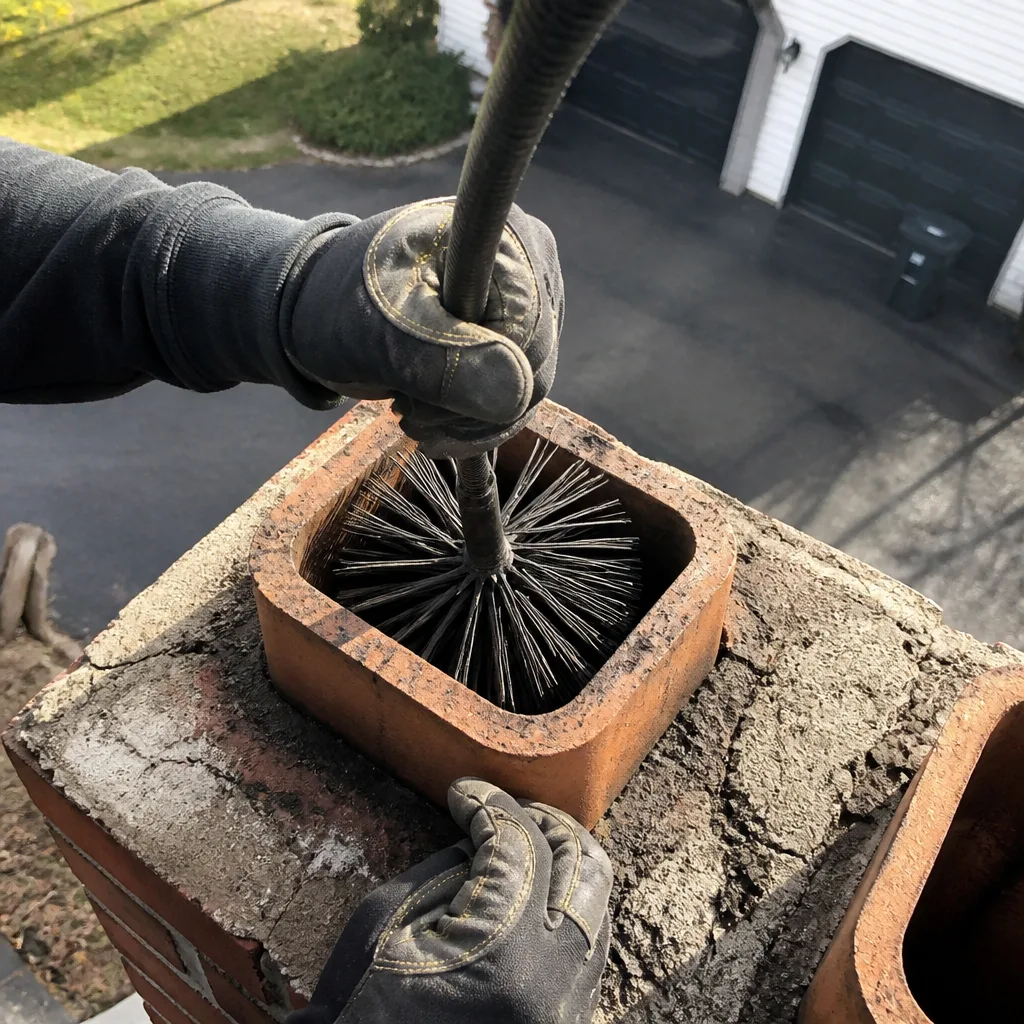
NFPA 211, Standard for Chimneys, Fireplaces, Vents, and Solid Fuel-Burning Appliances, is the reference standard incorporated by Pennsylvania’s UCC. A Level 2 inspection under NFPA 211 - the camera-down-the-flue examination that we perform as standard on every visit - generates findings that fall into three categories: maintenance recommendations, repair recommendations, and alteration requirements. Only the third category consistently triggers permit obligations.
Maintenance findings (no permit):
- Class I or II creosote accumulation requiring sweeping
- Minor mortar joint deterioration in the firebox, repairable with refractory cement
- Standard wear on a factory-built chimney cap, replaced like-for-like
- Damper adjustment or lubrication
- Fireplace door gasket replacement
Repair findings (permit status varies by township):
- Crown hairline cracks sealed with elastomeric coating - most Chester County jurisdictions allow this without permit, but West Chester Borough requires documentation of “no structural displacement” from a licensed contractor
- Partial firebrick replacement using identical materials - generally maintenance, but quantities over 25% of firebox surface often trigger permit thresholds
- Flue tile joint repair with ceramic sealant - borderline; DuraFlex and other manufacturers specify this as maintenance, but some townships classify any flue tile intervention as liner work
Alteration findings (permit required statewide):
- Stainless steel liner installation or replacement, whether rigid or flexible
- Transition from unlined masonry to lined system
- Change of fuel type (wood to gas, or gas to wood) requiring liner material or sizing change
- Smoke chamber parging to reduce corbelled surface
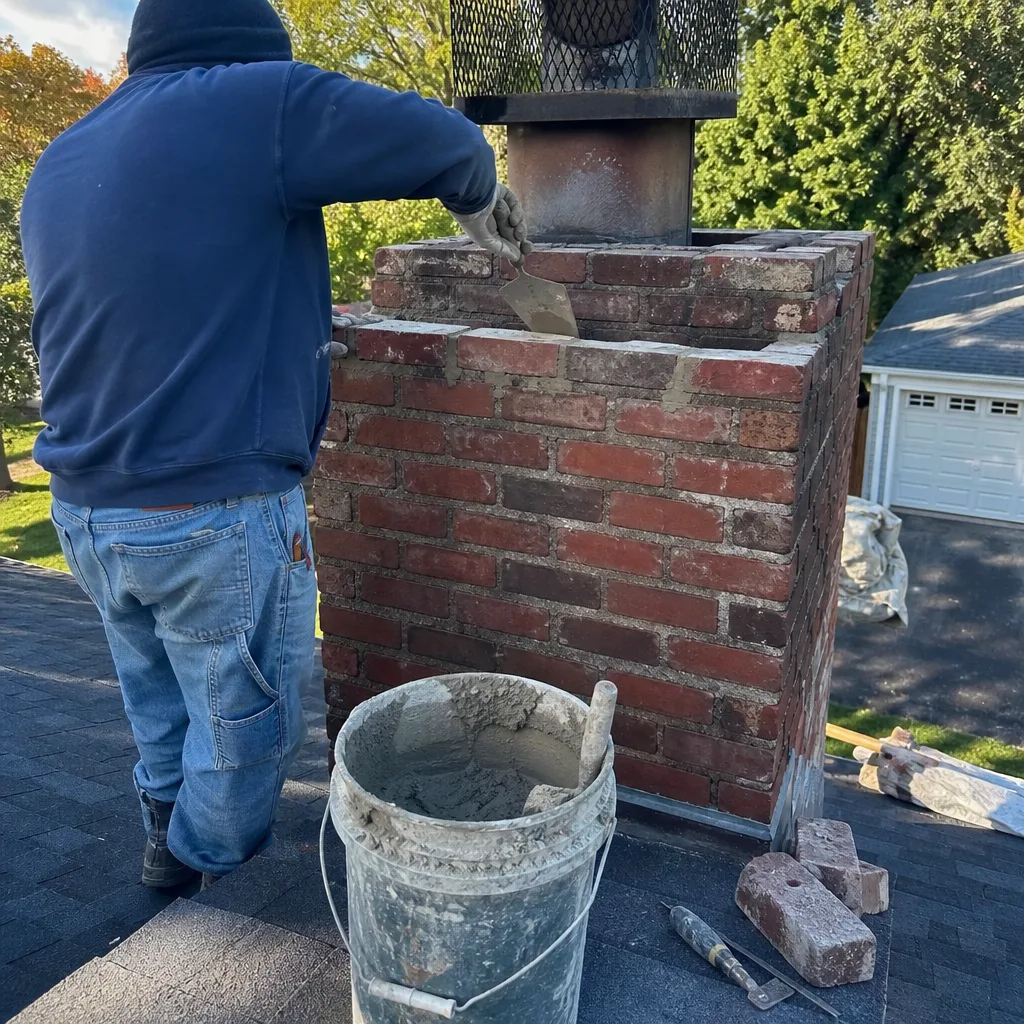
- Structural rebuild of the chimney above the roofline
- Installation of a HeatShield cerfractory flue seal system - this is classified as liner restoration, not maintenance, because it restores the flue’s integrity rather than preserving it
The specific finding language matters enormously. A Level 2 inspection report that states “the flue liner exhibits spalling and displacement; liner replacement recommended” creates a documented record of known defect. If the homeowner proceeds with replacement without a permit, that report becomes evidence of willful non-compliance if the issue surfaces later. Conversely, a report that states “the flue liner shows surface deterioration; monitor annually and sweep as needed” documents maintenance status without triggering permit obligations.
In our experience across 38,000+ inspections since 2009, the most common permit-triggering scenario in West Chester is the transition from an unlined masonry chimney serving a gas appliance to a lined system. Pennsylvania’s UCC amendment to the IRC requires that all gas appliances vent through a listed liner system, and the “repair” of installing a liner in previously unlined masonry is classified as new venting system installation, not maintenance. We’ve performed this work hundreds of times in West Chester, East Goshen, and Thornbury townships, and in every case, the mechanical permit was pulled before our technicians arrived on site - because Clause 1 of the Haven Standard requires written scope verification, and permit status is part of that scope.
The Chester County Permit Process for Chimney Liner Replacement
Chester County does not have a county-level building department. Permits are issued by individual townships and boroughs, each with its own forms, fees, and inspection scheduling. For chimney liner replacement, the process follows a consistent pattern across West Chester-area jurisdictions, with variations in timing and documentation requirements.
Step-by-step permit process:
- Determine jurisdiction. Check your property deed or tax bill for township or borough name. West Chester Borough, West Goshen Township, East Bradford Township, Westtown Township, and Thornbury Township each maintain separate code offices. West Chester Borough’s code office is at 401 East Gay Street; most township offices are at the municipal building.
- Submit mechanical permit application. The application requires: property address, owner name, contractor name and PA Home Improvement Contractor (HIC) registration number, scope of work description, and manufacturer specifications for the proposed liner. For stainless liners, we submit DuraFlex or Gelco specification sheets with the application. The fee in Chester County townships ranges from $75 to $200 for chimney mechanical permits, with West Chester Borough at the higher end due to plan review requirements.
- Plan review period. Most townships require 5-10 business days for review. West Chester Borough requires 10-15 business days for liner replacement because the plan reviewer verifies compliance with the borough’s historic preservation overlay in the downtown district. We’ve had permits delayed when the reviewer requested documentation that the liner installation wouldn’t disturb visible chimney exterior in a historic district property.
- Permit issuance and scheduling. Once issued, the permit includes inspection scheduling instructions. For chimney liner replacement, Chester County townships typically require two inspections: rough-in (after liner installation but before final connections) and final (after appliance connection and testing). Some townships, including West Goshen, allow single final inspection for straight replacement with no appliance change.
- Rough-in inspection. The inspector verifies liner material, sizing, and clearance to combustibles. In our experience, the most common rough-in failure in West Chester is insufficient clearance where the liner passes through the smoke chamber - the inspector will probe with a mirror and flashlight, and if the liner isn’t centered with visible clearance on all sides, the installation fails.
- Final inspection and approval. The inspector verifies appliance connection, draft test results, and visible liner termination. “Approval” in Chester County means the inspector signs the permit card and the township records the completion. This record is what title companies search during real estate transactions - not the quality of the installation, but the existence of the permit and final approval.
The critical detail most homeowners miss: permit approval is a binary record, not a quality assessment. A passed inspection means the installation met minimum code at the moment of inspection. It does not mean the liner was properly sized for the appliance, that the connection is durable, or that the work will perform over time. That’s why our Chimney Repair in West Chester service includes both permit compliance verification and independent performance documentation - camera footage, draft readings, and written warranty - under Haven Standard Clause 4.
Retroactive permits, when discovered during a home sale, follow a more difficult path. The township may require opening walls or removing portions of the installation for inspector visibility. In West Chester Borough, retroactive liner permits require a structural engineer’s letter certifying that the chimney can support the liner load - an additional $800-$1,500 cost that the original installer could have avoided by pulling the permit initially. We’ve provided expert documentation for retroactive permit applications where our original inspection report established the pre-existing condition timeline.
How Inspection Documentation Satisfies Insurer Requirements
Homeowner’s insurance and fire coverage operate on documentation standards that parallel but don’t identical with code permit requirements. Understanding this distinction protects you in claim scenarios where the insurer denies coverage based on maintenance records or installation documentation.
NFPA 211 Level 2 inspection documentation serves three independent insurance functions:
- Proof of maintenance diligence. Insurers increasingly deny chimney fire claims where the homeowner cannot demonstrate regular sweeping. A dated Level 2 report with creosote classification (Class I, II, or III) and sweep recommendation establishes that the homeowner acted on professional guidance. Our reports specify creosote class by NFPA definition: Class I (soot), Class II (granular), or Class III (glazed or tar-like), with photographic documentation of each.
- Pre-loss condition documentation. If a chimney fire occurs, the insurer’s adjuster will examine whether the liner and masonry were in serviceable condition before the incident. Camera footage showing intact liner walls, proper clearance, and no visible spalling supports the claim that the fire was an unforeseeable event rather than a maintenance failure. We’ve provided pre-loss documentation to West Chester homeowners that prevented claim denials after chimney fires in 2019 and 2021.
- Post-repair verification. After liner replacement or repair, insurers may require documentation that the work restored the system to code-compliant condition. A permit record proves code compliance; a Level 2 report with camera footage proves functional performance. Both matter, but in different claim contexts.
The specific scenario where both documents become critical is the total fire loss. Pennsylvania’s standard homeowner’s policy includes a “collapse” provision that covers chimney damage only if the chimney was maintained according to manufacturer’s specifications and NFPA standards. If the chimney lacked a required liner - documented in a pre-loss Level 2 report - the insurer may classify the damage as progressive maintenance failure rather than sudden collapse, reducing or denying coverage.
We’ve encountered this exact situation in West Chester’s Goose Creek Village development, where a 2017-built home with an unlined masonry chimney serving a wood-burning fireplace experienced a chimney fire. The insurer’s adjuster requested five years of maintenance records. The homeowner had no documentation because they’d never had a professional inspection. The claim was reduced by 40% based on “failure to maintain.” A Level 2 report from any of our Chimney Cleaning & Sweep in West Chester visits would have established maintenance diligence and preserved full coverage.
Permit records serve a separate function: they prove that alteration work was performed under code oversight. If a liner installation without permit contributes to a fire, the insurer may invoke a policy exclusion for “work performed without required permits.” This exclusion is standard in Pennsylvania homeowner’s policies issued after 2015. The permit record is the defense; the Level 2 report is the corroboration. Neither substitutes for the other.
At Emberly Chimney Cleaners, we deliver both on every alteration job: permit verification as part of written scope (Haven Standard Clause 1), and camera-scan documentation with written record on completion (Clause 4). Our archive of 38,000+ documented inspections, maintained continuously since 2009, means we can produce historical documentation for any property we’ve serviced - a capability that has supported insurance claims, real estate disclosures, and warranty disputes for our West Chester customers.
What a Sweep Company Can Legally Do Without a Contractor’s License
Pennsylvania’s Home Improvement Consumer Protection Act (HICPA) requires a Home Improvement Contractor registration for any work exceeding $500 on residential properties. The registration is not a trade license - it doesn’t certify chimney expertise - but it is a legal requirement for contracting, advertising, and performing home improvement work.
However, HICPA contains a specific exemption for “cleaning, sweeping, and routine maintenance of chimneys and vents” regardless of contract value. This exemption creates a legal category of chimney professional who can perform maintenance without HICPA registration, but cannot perform alteration work that requires a permit.
The practical boundary is where most homeowners get misled. A sweep company without HICPA registration can legally:
- Sweep and clean any chimney or vent system
- Inspect and document condition with written report
- Replace standard chimney caps with identical specifications
- Apply sealants and coatings that don’t alter structure or venting path
- Recommend and refer for permitted work
That same company cannot legally:
- Contract for liner installation or replacement
- Perform smoke chamber parging
- Rebuild crowns, shoulders, or above-roof masonry
- Install or replace dampers that affect venting configuration
- Advertise or perform any work requiring a building or mechanical permit
The risk to homeowners is twofold. First, unregistered contractors performing permitted work may be unable to pull the required permit - some townships verify HICPA registration before accepting permit applications. Second, work performed by an unregistered contractor lacks the statutory protections of HICPA, including the requirement for written contract, right of rescission, and access to the Home Improvement Contractor Recovery Fund for unpaid or defective work.
We’ve reviewed competitor estimates in West Chester where a “sweep special” of $199 expanded to $3,400 of “recommended” liner replacement performed by the same unregistered technician. The homeowner had no written contract for the alteration work, no permit was pulled, and when the liner failed within two years, the company had dissolved. Our Free Second Opinion on Any Written Estimate - available at any time - would have identified the HICPA registration requirement and the missing permit scope.
Emberly Chimney Cleaners maintains active HICPA registration and verifies permit requirements before any alteration work. Our technicians are background-checked, uniformed, and license-number identified - Haven Standard Clause 3, “Verified crews.” When we recommend liner replacement, the written scope includes permit application, township inspection scheduling, and final approval documentation. The price you see before work starts includes all of these costs; there is no “permit extra” surprise.
Real Estate Transactions: When Inspection Reports Become Disclosure Documents
Pennsylvania’s Real Estate Seller Disclosure Law (68 P.S. § 7301 et seq.) requires sellers to disclose known material defects affecting the property’s value or desirability. The law specifically lists “roof, chimney, fireplace” as systems requiring disclosure. What many West Chester sellers don’t realize: a professional chimney inspection report in your possession becomes a “known defect” that you are legally obligated to disclose, regardless of whether you agree with the findings.
The triggering event is possession of the report, not acceptance of its conclusions. If you hire Emberly Chimney Cleaners for a Level 2 inspection before listing your West Chester home, and our report documents cracked flue tiles, deteriorated mortar joints, or Class III creosote accumulation, you must disclose these findings on the Seller’s Property Disclosure Statement. Failure to disclose can result in post-sale liability, even if the buyer’s own inspector might have missed the condition.
The disclosure obligation creates strategic considerations for timing:
- Pre-listing inspection with repair completion. Have the inspection performed, complete all recommended work with permits, and disclose the prior condition with documentation of remediation. This is the strongest position; the buyer’s inspector verifies completed work, and the permit records confirm code compliance.
- Pre-listing inspection with deferred maintenance. Disclose the findings and price accordingly. Some sellers in West Chester’s competitive market prefer this transparency, accepting a lower offer rather than managing repair logistics during escrow. Our written report with camera footage provides the documentation buyers need to evaluate the condition.
- Buyer’s inspection discovery. If the buyer’s inspector finds conditions you were unaware of, you have no prior disclosure obligation for that specific finding. But if the buyer’s findings match a report you previously obtained and didn’t disclose, you’ve exposed yourself to fraud claims.
- Unpermitted work discovery. This is where permit records intersect with disclosure law. If a previous owner installed a liner without permit, and you became aware of this through any means - neighbor mention, service call, your own inspection - the unpermitted status is a material defect requiring disclosure. The buyer’s title search or inspector may independently discover the missing permit, but your prior knowledge triggers the disclosure duty regardless.
In West Chester’s active market, particularly in neighborhoods like West Chester Borough’s historic district, Marshallton, and Fern Hill where home ages exceed 75 years, chimney condition frequently becomes a negotiation point. We’ve provided expert consultation for sellers facing buyer repair demands, and our documentation has supported both repair negotiations and “as-is” pricing strategies.
The specific documentation that protects sellers: dated Level 2 inspection report with camera footage, permit records for all alteration work, and written warranties for completed repairs. Our Fireplace Services in West Chester includes pre-sale inspection packages designed for disclosure compliance, with report formatting that satisfies West Chester-area real estate attorneys’ requirements for due diligence documentation.
One final consideration: Pennsylvania law permits sellers to provide a $500 credit in lieu of repair for disclosed defects, but this applies only to defects disclosed before contract. Undisclosed defects discovered during inspection become negotiable without the statutory cap. A $300 pre-listing inspection can prevent a $3,000 post-inspection demand - or a failed sale.
Common Mistakes to Avoid
- Assuming “no permit needed” applies to all chimney work. Pennsylvania’s maintenance exemption is narrow. Liner replacement, crown rebuild, and smoke chamber modification always require permits in Chester County. We’ve seen West Chester homeowners face $2,000+ retroactive permit costs because the original installer claimed “sweeps don’t need permits.”
- Accepting verbal scope without written documentation. HICPA requires written contracts for alteration work over $500. More fundamentally, without written scope, you cannot verify what permit was applied for or what inspection was scheduled. Haven Standard Clause 1 exists because we’ve seen too many homeowners with no record of what was promised.
- Treating permit approval as quality certification. A township inspector verifies code minimums at a single point in time. They don’t verify liner sizing calculations, appliance compatibility, or workmanship durability. Always require independent documentation: camera footage, draft readings, and written warranty. Our Clause 4 photo record provides this independently of permit status.
- Disclosing only “major” inspection findings. Pennsylvania disclosure law doesn’t distinguish major from minor. A hairline crack in a flue tile is a known defect if it’s in your inspection report. We’ve consulted with West Chester sellers who believed “minor” findings didn’t require disclosure - incorrectly.
- Hiring based on lowest sweep price without verifying HICPA registration. The $149 sweep special from an unregistered contractor cannot legally expand to permitted work. When the “recommended” liner replacement follows, you’re working with an illegal operator. Verify registration at Emberly Chimney Cleaners West Chester home or through the Pennsylvania Attorney General’s office before any work begins.
- Ignoring neighborhood-specific enforcement patterns. West Chester Borough’s historic overlay triggers additional review. West Goshen Township requires electronic permit submission with photo documentation. East Bradford allows phone scheduling for inspections; Westtown requires online booking. These procedural differences affect timeline and cost. We maintain current procedures for all Chester County jurisdictions.
- Discarding old inspection reports. Insurance claims and disclosure disputes may require documentation from years prior. Our archive extends to 2009; if we inspected your chimney, we can reproduce your report. Homeowners who discard paper records lose this protection.
When to Call a Professional
Call a professional when your chimney work crosses from maintenance into alteration, when you’re preparing to sell your home, or when you need documentation that protects insurance coverage. Specifically: if your sweep recommends liner replacement, crown rebuild, or smoke chamber modification; if you’re listing a West Chester property built before 1990; if your insurer requests maintenance documentation after a claim; or if you’ve received a competitor’s estimate and need verification of scope, permit requirements, or pricing.
Emberly Chimney Cleaners West Chester offers free estimates in West Chester and all surrounding Chester County townships. Every estimate includes written scope, permit verification for alteration work, and our 365-Day Done Right Promise. Call (610) 321-4570 to schedule - our phones are answered by live support 24 hours a day, and you’ll receive a text when your assigned, background-checked technician is on the way.
Frequently Asked Questions
No. Routine chimney cleaning and sweeping are classified as maintenance under Pennsylvania’s Uniform Construction Code and do not require a permit anywhere in the state. This includes soot and creosote removal, firebox cleaning, and standard cap replacement with identical specifications. If your sweep recommends work beyond these maintenance activities, permit requirements may apply. Call (610) 321-4570 for a free estimate with written scope and permit verification.
A standard Level 2 chimney inspection and sweep in West Chester typically ranges from $250 to $400, depending on chimney height, accessibility, and creosote accumulation level. This includes camera-scan documentation, written report, and photo record under Haven Standard Clause 4. Liner replacement, permitted work, and repairs are quoted separately in writing before any work begins. We do not provide “ballpark” figures that change on arrival - the price in your written estimate is the price you pay.
You need a new liner when the existing liner is damaged, improperly sized for your appliance, or absent entirely - conditions we document with camera footage and specify in writing. Common indicators: visible cracks or gaps in clay flue tiles, corrosion or separation in metal liners, or an unlined masonry chimney serving any fuel-burning appliance. In West Chester’s older neighborhoods like the historic district and Marshallton, unlined chimneys are common in pre-1940 construction. We provide a Free Second Opinion on any competitor’s written estimate if you want verification of a liner recommendation. Nothing is recommended without camera evidence you can see for yourself, and we’ll tell you plainly when work can safely wait.
NFPA 211 recommends annual inspection for all chimneys, with sweeping frequency determined by creosote accumulation, not calendar time. In West Chester’s climate - cold, wet winters with frequent freeze-thaw cycling - we typically see heavier creosote buildup than in drier inland regions, and more rapid masonry deterioration. Most wood-burning fireplaces in Chester County require sweeping every 1-2 cords of seasoned hardwood burned, which for average use means annual or biennial service. Gas appliance chimneys require less frequent sweeping but still need annual inspection for debris obstruction and liner deterioration. Our inspection reports specify your actual creosote class and recommended service interval based on your specific usage pattern.
Skipped maintenance leads to progressive, documented deterioration: creosote accumulation increases fire risk (Class III creosote ignites at approximately 451°F, lower than common operating temperatures); moisture intrusion causes spalling brick, deteriorated mortar, and rusted damper assemblies; and liner damage allows combustion gases, including carbon monoxide, to enter wall cavities. In West Chester’s freeze-thaw climate, water-damaged masonry accelerates rapidly - we’ve documented chimneys that required rebuild rather than repair after two winters of deferred maintenance. Insurance claims for chimney fires are frequently reduced or denied when maintenance records cannot be produced. The cost of annual inspection and sweeping is consistently lower than the cost of remediation after failure.
Pennsylvania law permits homeowner-performed work on their own residence, but the permit requirement still applies - you must pull the mechanical permit yourself, schedule inspections, and comply with all code requirements. The practical obstacles are substantial: liner sizing requires combustion analysis and appliance specification matching; installation requires working on the roof with proper fall protection; and failed inspection requires rework that may exceed original contractor pricing. More critically, improper liner installation creates fire and carbon monoxide hazards that endanger occupants. We do not recommend DIY liner installation and will not provide step-by-step instructions for this work. Our written estimates include permit costs transparently; the protection of code-compliant installation, documented warranty, and our 365-Day Done Right Promise exceeds any perceived savings from self-installation.
A Level 1 inspection is a visual examination of readily accessible portions of the chimney exterior and interior, performed without specialized tools - essentially what a competent homeowner could observe with a flashlight. A Level 2 inspection, required by NFPA 211 when a property changes hands, after a chimney fire, or before liner installation, includes camera-scan examination of the full flue length, inspection of accessible attics and crawl spaces, and documentation of all findings with written report and photo record. At Emberly Chimney Cleaners, we perform Level 2 inspection as our standard on every visit - we don’t offer Level 1 because it doesn’t provide the documentation our customers need for insurance, real estate, and warranty purposes. This practice, continuous since 2009, became Clause 4 of the Haven Standard.
The Bottom Line
Pennsylvania’s permit framework for chimney work is straightforward in principle but complex in application: cleaning requires no permit, alteration always does, and the boundary between them depends on specific work scope and township interpretation. In Chester County, mechanical permits for liner replacement and structural repair are issued by individual townships with varying procedures, and unpermitted work discovered during real estate transactions can cost sellers thousands in retroactive permits or buyer credits. NFPA 211 Level 2 inspection documentation satisfies insurer requirements independently of permit records, but both documents protect you in different scenarios. The essential protections are: written scope and price before work starts, permit verification for alteration work, camera-scan documentation with photo record, and retention of all records for insurance and disclosure purposes. These are not extras - they are the baseline of professional chimney service, and they are the foundation of the Haven Standard we’ve operated under since 2009.
Written by Corrine Halstead, Owner at Emberly Chimney Cleaners West Chester, serving West Chester since 2009.